
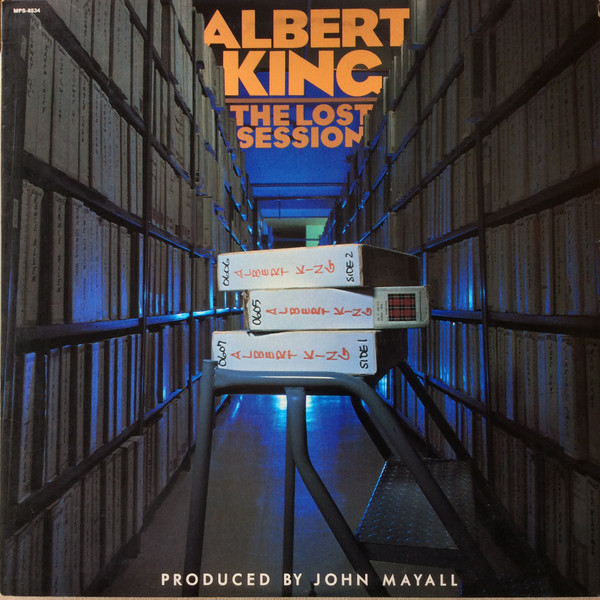
The Lost Session
By Albert King
The Story
Released in 1986, The Lost Session is an archival Albert King album built from a session recorded on August 28, 1971 at Wolfman Jack Studios in Los Angeles. The recording paired King with John Mayall, who is credited as producer and also played organ, piano, harmonica, and twelve-string guitar on the session. Rather than revisiting Albert King's better-known Stax hits, this album captures him in a looser studio collaboration centered on original material written by King and Mayall. That gives the record a different place in his catalog: less a greatest-hits-style showcase and more a snapshot of a specific working session between two major blues figures.
The track list reflects that character. She Won't Gimme No Lovin', Cold in Hand, and Stop Lying establish a direct electric blues setting built around King's vocal phrasing and sharp, economical lead guitar. All the Way Down and Tell Me What True Love Is continue that groove-oriented approach, while Down the Road I Go and Money Lovin' Women lean into a harder blues-rock feel. The inclusion of Sun Gone Down in two separate takes makes the album especially interesting, because it preserves the sense of an in-progress session rather than a tightly polished studio concept. Brand New Razor adds another strong mid-tempo blues performance before the second version of Sun Gone Down closes the record.
What makes The Lost Session notable is its stripped-down atmosphere. With Mayall's backing and King at the center, the album highlights tone, phrasing, and ensemble feel over elaborate production. It belongs to that class of archival blues releases that matter not because they reinvent an artist's legacy, but because they reveal another angle of it. In this case, the session shows Albert King outside the exact framework of his classic Stax sides, still unmistakable in touch and presence, but heard in a more informal collaborative setting that links Memphis electric blues to the broader blues-rock world around John Mayall. The result is a valuable historical document from a 1971 session that was issued years later as a standalone album.