
logologo
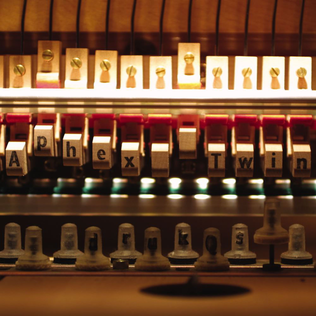
Drukqs album cover

Drukqs

By Aphex Twin

  • Masterpiece badge
Released
October 22, 2001

Genres

  • idm
  • drill and bass
  • jungle
  • ambient
  • electroacoustic

The Story

Drukqs was released in 2001 as a double album by Aphex Twin, the main alias of Richard D. James, and it became one of the most divisive records in his catalog. Coming five years after Richard D. James Album, it arrived with enormous expectation from listeners who had come to associate Aphex Twin with restless reinvention. Instead of offering one clear new direction, Drukqs presented a huge, fragmented archive-like work: hyper-detailed breakbeat programming, jungle and drill-and-bass assaults, prepared-piano miniatures, ambient fragments, and electroacoustic experiments placed side by side. The album's release was tied to one of the more unusual stories in James's career. He said he decided to put the record out after accidentally leaving an MP3 player containing a large amount of unreleased music on a plane, worrying that the tracks might eventually leak online. He also described it as connected to the end of his Warp Records contract, which helped fuel speculation that the album was partly a clearinghouse of material. James rejected simple explanations of the title, saying it was just a word he had made up, and many of the track names were written in Cornish or used coded-looking titles that added to the record's private, cryptic atmosphere. Musically, Drukqs is defined by contrast. Tracks such as 'Vordhosbn', 'Cock/Ver10', '54 Cymru Beats', 'Taking Control', and 'Ziggomatic 17' push James's rhythmic programming into dense, almost impossible-sounding patterns, where breakbeats are chopped, accelerated, twisted, and layered with a precision that can feel both playful and violent. These pieces connect the album to drill and bass, jungle, acid, and the more extreme side of late-1990s Aphex Twin, but their detail also makes them feel more like mechanical compositions than simple club tracks. Against that intensity, Drukqs repeatedly turns toward quiet keyboard pieces. 'Jynweythek', 'Kladfvgbung Micshk', 'Strotha Tynhe', 'Avril 14th', 'QKThr', 'Father', and 'Nanou2' show a softer side of James's writing, often using piano, prepared piano, harmonium-like textures, or computer-controlled acoustic instruments. 'Avril 14th' became the album's most widely recognized composition, later traveling far beyond the Aphex Twin audience through film, television, and sampling. Its simple, fragile melody gave Drukqs an emotional center that many listeners discovered separately from the album's more abrasive electronic tracks. The record was polarizing on release. Some critics heard it as overlong, uneven, or too close to territory James had already explored, while others recognized its scope and craft. Over time, its reputation became more generous. What once seemed scattered has often been reinterpreted as part of its design: a double album that refuses to separate the violent and the delicate, the handmade and the programmed, the comic and the solemn. In Aphex Twin's discography, Drukqs stands as a strange ending and a strange bridge. It was his last full album under the Aphex Twin name until Syro in 2014, and it gathered many sides of his language into one demanding release. It is not as immediately unified as Selected Ambient Works 85–92 or as concise as Richard D. James Album, but it remains one of the clearest demonstrations of his range: a record where a prepared-piano miniature and a brutally complex breakbeat track can feel like parts of the same private machine.

What They Thought Then

NME - July 11, 2001

"most diverse, audacious and accomplished collection to date"

NME.com's advance preview, published more than three months before release, described the 30-track double album after receiving exclusive early access.

NME - October 20, 2001

Alex Needham

"What 'Drukqs' never is, of course, is boring."

Needham's formal NME review praised the album's pacing and range, while noting that James rarely moved far beyond his established musical palette.

The Guardian - October 19, 2001

Dave Simpson

"a collection of fragments, abstractions and barely half-baked ideas."

Simpson's two-star Guardian review argued that the 30-track set mostly offered weaker echoes of earlier Aphex Twin work, despite isolated highlights.

Pitchfork - October 25, 2001

Malcolm Seymour III

"an album as conventional as Drukqs comes as a sad surprise."

Seymour criticized the record for revisiting earlier Aphex styles instead of presenting the reinvention listeners had come to expect from James.

The Washington Post - November 4, 2001

Joshua Klein

"here he sounds satisfied to settle into routine."

Klein found the abrasive beat-driven material overly familiar, but singled out the quieter instrumental pieces as among James's most interesting and haunting work.

Spin - November 2001

Simon Reynolds

"seldom leaves an imprint in your memory, let alone your heart."

Reynolds objected to the album's hyper-detailed programming and felt its constant transformations produced competent fragments without lasting emotional force.

Los Angeles Times - December 16, 2001

Steve Baltin

"a surprisingly warm and accessible record."

Baltin emphasized the piano-led interludes and the contrast between techno, ambient and classical elements, finding the enormous double album more approachable than it appeared.

Rolling Stone - 2001

Pat Blashill

"his most irrelevant album to date"

Blashill's one-star Rolling Stone review treated the double album as a low point, criticizing its cryptic titles, gratuitous strangeness and lightweight classical passages.