
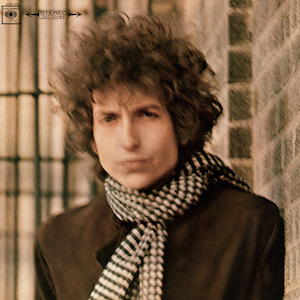
Blonde on Blonde
By Bob Dylan
The Story
Blonde on Blonde represents the culmination of Bob Dylan’s mid-1960s transformation, bringing together his electric sound, expansive songwriting, and evolving lyrical style into one of the first widely recognized double albums in rock music. Released in 1966, the album followed the breakthroughs of Bringing It All Back Home and Highway 61 Revisited, and it further pushed the boundaries of what a popular music album could achieve in both scope and depth. Recorded across sessions in New York and Nashville, the album reflects a period of intense creativity during which Dylan was refining his approach to both language and sound.
A key element of the album’s identity comes from its recording process. After initial sessions in New York produced limited results, Dylan moved to Nashville, where he worked with a group of experienced session musicians. This shift contributed to a more fluid and responsive sound, often referred to as a blend of rock and country influences. Producer Bob Johnston played an important role in facilitating this environment, allowing Dylan the flexibility to explore his ideas while maintaining a cohesive direction.
Lyrically, Blonde on Blonde is characterized by its dense imagery, surreal narratives, and emotional ambiguity. Songs like 'Visions of Johanna' and 'Sad Eyed Lady of the Lowlands' present extended, intricate compositions that combine poetic abstraction with personal expression. These tracks demonstrate Dylan’s ability to sustain complex ideas over longer forms, contributing to the album’s reputation for depth and sophistication.
At the same time, the album includes more direct and accessible songs. 'I Want You' offers a concise and melodic contrast to the longer pieces, while 'Just Like a Woman' became one of Dylan’s most widely recognized songs, blending personal reflection with a memorable structure. 'Rainy Day Women #12 & 35', which opens the album, introduces a looser and more spontaneous atmosphere, featuring a distinctive arrangement that differs from the rest of the record.
The album also explores blues-based structures, particularly in tracks like 'Leopard-Skin Pill-Box Hat' and 'Obviously 5 Believers', while songs such as 'Stuck Inside of Mobile with the Memphis Blues Again' combine narrative storytelling with repetitive musical frameworks. This variety contributes to the album’s sense of breadth, allowing it to move between different moods and styles while maintaining a consistent artistic voice.
Blonde on Blonde was both critically and commercially successful, reinforcing Dylan’s position as one of the most influential artists of his time. Its length and ambition challenged conventional expectations for albums, demonstrating that popular music could support more extensive and complex works.
In retrospect, the album is often seen as a defining moment in Dylan’s career and in the development of rock music as an art form. It captures a period when experimentation, lyrical innovation, and musical expansion converged, resulting in a work that continues to be studied and appreciated for its originality and impact.