
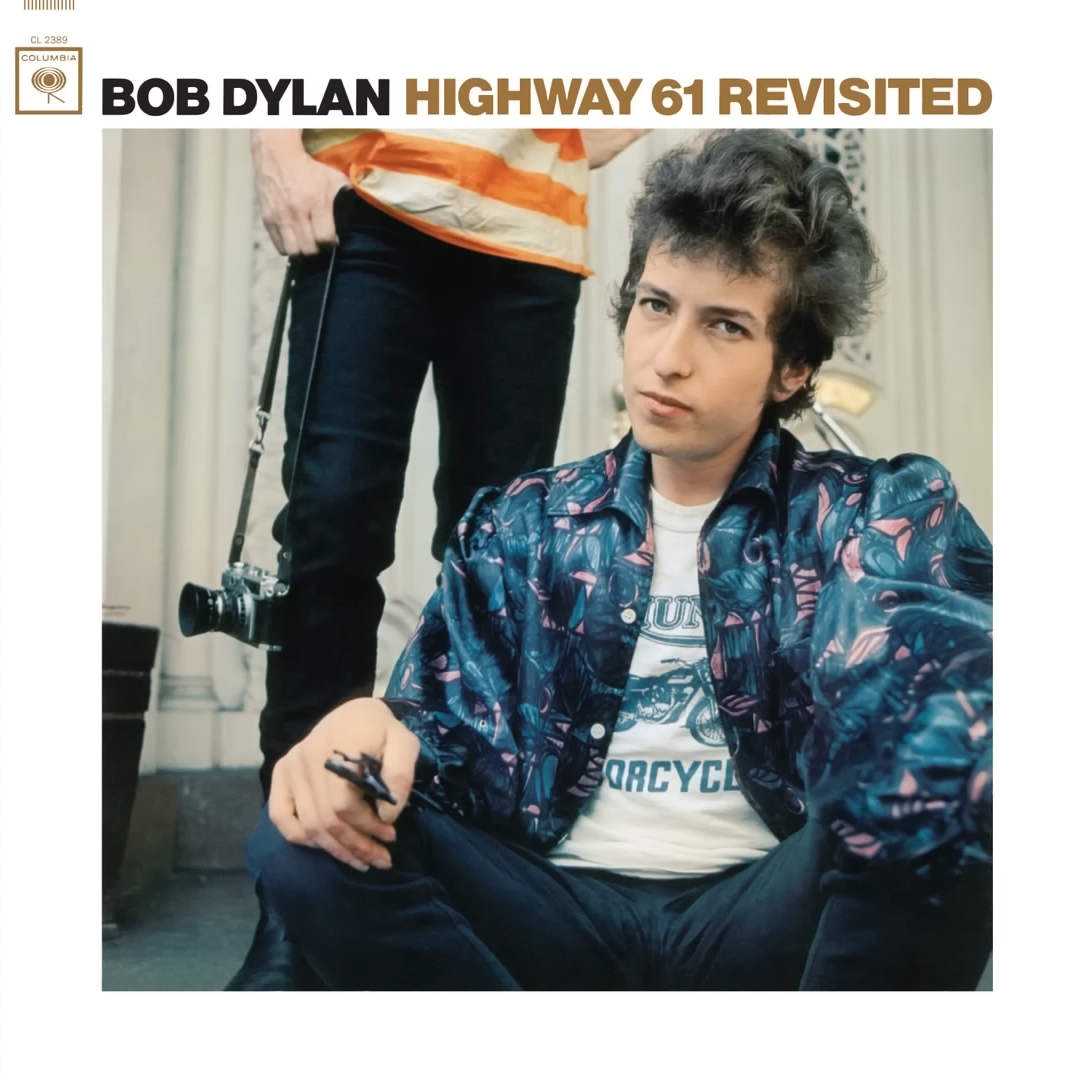
Highway 61 Revisited
By Bob Dylan
The Story
Highway 61 Revisited marked a decisive transformation in Bob Dylan’s career, solidifying his move away from traditional acoustic folk into a fully electric sound. Released in 1965, the album followed a period of rapid artistic change during which Dylan began expanding his lyrical style and musical approach. The use of electric instruments, combined with a band-oriented sound, placed the album at the center of a broader shift in popular music, where the boundaries between folk, rock, and blues were being redefined.
The opening track, 'Like a Rolling Stone', became one of Dylan’s most influential recordings. Its extended length and unconventional structure challenged radio norms, while its lyrics introduced a direct and confrontational tone. The song’s success played a key role in bringing Dylan’s new sound to a wider audience, despite initial resistance from segments of his earlier fan base.
Throughout the album, Dylan combines surreal imagery, social commentary, and narrative storytelling. Songs like 'Ballad of a Thin Man' and 'Desolation Row' present dense and often ambiguous lyrics, inviting interpretation while maintaining a strong sense of mood and character. This approach reflects Dylan’s growing interest in blending literary influences with contemporary themes, creating a style that was both complex and accessible.
The album’s title references Highway 61, a major American route that runs through the Mississippi Delta, an area closely associated with the history of blues music. This connection is reflected in the album’s sound, which incorporates blues structures alongside rock instrumentation. Tracks such as 'Tombstone Blues' and 'From a Buick 6' emphasize rhythmic drive and energy, while 'It Takes a Lot to Laugh, It Takes a Train to Cry' offers a more relaxed and traditional feel.
Musically, the album features contributions from a group of session musicians who helped shape its sound. The interplay between guitar, organ, and rhythm section creates a cohesive backdrop for Dylan’s vocal delivery, which varies from conversational to intense. The production, led by Bob Johnston, maintains a balance between clarity and spontaneity, allowing the performances to retain a sense of immediacy.
Highway 61 Revisited was both a critical and commercial success, further establishing Dylan as a leading figure in contemporary music. It built on the momentum of his earlier work while pushing his artistic direction forward, influencing a wide range of artists across different genres.
In retrospect, the album stands as a landmark release that captures a moment of transition and innovation. It reflects Dylan’s willingness to challenge expectations and redefine his own identity as an artist, resulting in a work that continues to be studied and appreciated for its lyrical depth and musical impact.