
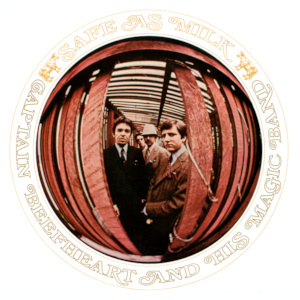
Safe as Milk
The Story
Safe as Milk is the debut album by Captain Beefheart and His Magic Band, released in 1967. It introduced Don Van Vliet, known as Captain Beefheart, as one of rock music's strangest and most original voices. The album arrived during the psychedelic era, but it did not simply follow the sound of San Francisco or British psychedelia. Instead, it fused electric blues, garage rock, soul, doo-wop, and surreal lyrical imagery into a style that already pointed toward the more radical music Beefheart would later make.
The album was produced by Richard Perry and recorded with a version of the Magic Band that included guitarist Ry Cooder, whose slide guitar work became one of the record's most important musical features. Cooder's playing helped ground the album in blues tradition, even as Beefheart pushed the songs into unusual shapes. Tracks like 'Sure 'Nuff 'n Yes, I Do' and 'Grown So Ugly' show the band's deep connection to blues, while songs such as 'Zig Zag Wanderer' and 'Dropout Boogie' bring a sharper, more modern garage-rock energy.
Although Safe as Milk is more accessible than Captain Beefheart's later masterpiece Trout Mask Replica, it already contains many of the traits that would define his career. Beefheart's voice is raw, flexible, and commanding, moving between blues growl, spoken phrasing, and eccentric melodic lines. His lyrics often feel playful and mysterious, filled with strange images rather than straightforward storytelling. 'Electricity' became one of the album's most famous tracks, with its theremin-like sounds and dramatic vocal performance giving the record one of its clearest links to the psychedelic atmosphere of the time.
The album also shows surprising variety. 'I'm Glad' is a tender soul-influenced ballad that reveals a softer side of Beefheart's writing, while 'Yellow Brick Road' and 'Abba Zaba' mix childlike imagery with unusual rhythms and melodies. 'Plastic Factory' adds a tougher, more satirical edge, and 'Autumn's Child' closes the album with one of its most atmospheric and forward-looking moments.
Safe as Milk was not a major commercial success when it was released, but its reputation grew over time. It became recognized as one of the most important debut albums of the late 1960s underground rock scene, admired for the way it balanced blues roots with experimental imagination. The album stands as the point where Captain Beefheart first revealed his unique musical world: strange, funny, rough, poetic, and deeply connected to American blues while refusing to stay within its traditional limits.