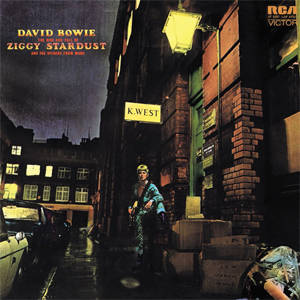
The Rise and Fall of Ziggy Stardust and the Spiders from Mars
By David Bowie
The Story
The Rise and Fall of Ziggy Stardust and the Spiders from Mars marked the breakthrough that transformed David Bowie from a cult figure into one of the defining artists of the 1970s. Released in 1972, the album introduced Ziggy Stardust, a fictional rock star who arrives as a messenger of hope in a world with only five years left before its end. Drawing on science fiction, theater, and rock mythology, Bowie crafted not just a set of songs but a loose narrative that followed Ziggy's rise to fame, excess, and eventual collapse. While not a strict concept album in a traditional sense, its themes and sequencing created a strong sense of continuity and identity.
The opening track, 'Five Years', sets the tone with its apocalyptic premise, gradually building from a sparse beginning into an emotional crescendo that establishes the urgency of the story. From there, Bowie blends personal reflection and cosmic imagery. 'Soul Love' explores different forms of love, while 'Moonage Daydream' introduces Ziggy as an otherworldly figure, combining surreal lyrics with a powerful guitar performance by Mick Ronson, whose arrangements became central to the album's sound. Ronson's role, along with the tight rhythm section of Trevor Bolder and Mick Woodmansey, helped define the identity of the Spiders from Mars as more than just backing musicians.
' Starman' became the album's breakthrough single and a key moment in Bowie's career. Its accessible melody and hopeful message brought Ziggy's story to a wider audience, especially after a widely discussed television performance that helped solidify Bowie's image. The album continues to shift between narrative and commentary. 'Lady Stardust' reflects on identity and performance, often interpreted as inspired by figures from the glam scene, while 'Star' and 'Hang On to Yourself' capture the excitement and chaos of fame.
At the center of the album is the song 'Ziggy Stardust', which distills the character into a mythic rock figure whose talent and ego ultimately lead to his downfall. This theme continues into 'Suffragette City', one of the album's most energetic tracks, before the story reaches its conclusion with 'Rock 'n' Roll Suicide'. The closing song portrays Ziggy at the end of his journey, combining theatrical intensity with a message of connection and survival, and remains one of Bowie's most powerful performances.
Musically, the album blends straightforward rock structures with theatrical presentation and lyrical ambition. It avoids the complexity of progressive rock while still feeling expansive, relying on strong songwriting, memorable hooks, and distinctive arrangements. The influence of earlier rock and roll is present, but it is reimagined through Bowie's futuristic and androgynous persona. The visual presentation, including Bowie's stage costumes and performances, became inseparable from the music, helping to establish glam rock as both a sound and a style.
The Rise and Fall of Ziggy Stardust and the Spiders from Mars had a lasting impact on popular music and culture. It reshaped ideas about identity, performance, and what a rock artist could represent, influencing generations of musicians across different genres. For Bowie, it marked the beginning of a period of intense creativity and reinvention. The album remains one of his most celebrated works, capturing a moment when music, character, and narrative came together to create something that felt both immediate and timeless.