
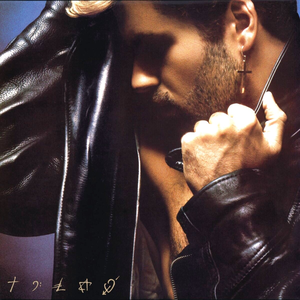
Faith
By George Michael
The Story
Faith was the album that transformed George Michael from one half of Wham! into one of the defining solo artists of the late 1980s. Released in 1987 by Epic and Columbia, it was his first solo studio album after Wham!'s farewell and a deliberate statement of independence. Michael wrote, produced, and arranged almost the entire record himself, and he played several instruments on it, making the album not just a change of image but a declaration of control over his music.
The record arrived after Michael had already proved that his ambitions went beyond bright pop singles. Songs such as 'Careless Whisper' and 'A Different Corner' had shown his skill with ballad writing, but Faith pushed that maturity into a broader musical world. It moved between rock and roll, funk, soul, dance-pop, gospel-colored balladry, and jazz-pop, often with a compactness that made the songs feel instantly accessible. The title track opened the album with church organ before snapping into a stripped, rockabilly-influenced groove, symbolically closing the Wham! chapter while presenting Michael as a leaner, more self-directed performer.
The singles defined the album's reach. 'Faith' became one of Michael's signature songs, while 'Father Figure' revealed a darker, more intimate vocal style. 'One More Try' placed his voice almost naked against a gospel-soul arrangement, turning emotional restraint into drama. 'Monkey' brought the record back to dance and funk, and 'Kissing a Fool' closed the singles run with a sophisticated, jazz-influenced ballad that showed how far Michael was moving from the simple teen-pop image some listeners still attached to him.
The most controversial track was 'I Want Your Sex', released before the album and banned or restricted by some broadcasters because of its title and subject matter. Michael defended the song as being about desire within commitment rather than casual exploitation, and the album version expanded it into a multi-part funk piece. Its controversy helped announce that Faith would not be a safe rebranding exercise. Michael was challenging both the public's expectations of him and the limits placed on mainstream pop stars who wanted to write openly about adult themes.
Faith became a massive commercial success, producing multiple hit singles and winning the Grammy Award for Album of the Year in 1989. It also created an image that became inseparable from the era: leather jacket, stubble, jukebox, guitar, and a carefully constructed sense of masculine cool. Yet behind that image was a meticulous songwriter and producer using pop stardom to prove his musical range. The album's lasting importance is that it made George Michael's solo identity undeniable. It was stylish and commercial, but also unusually self-authored for a blockbuster pop record of its time.