
logologo
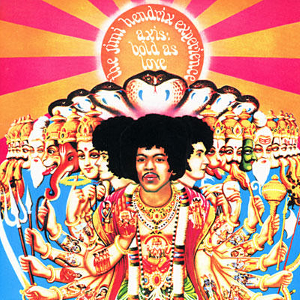
Axis: Bold as Love album cover

Axis: Bold as Love

By Jimi Hendrix

  • Masterpiece badge
Released
December 1, 1967

Genres

  • psychedelic rock
  • psychedelic pop
  • acid rock

The Story

Released on December 1, 1967, Axis: Bold as Love was the second album by the Jimi Hendrix Experience and showed a rapid expansion of Hendrix’s songwriting and studio experimentation. Working again with bassist Noel Redding, drummer Mitch Mitchell, and producer Chas Chandler, Hendrix explored layered guitar textures, stereo panning, and effects-driven arrangements. Compared to Are You Experienced, the album emphasized shorter compositions, melodic structure, and cohesive sequencing while maintaining psychedelic experimentation. EXP opens the album with a spoken-word introduction and sound effects, leading into Up from the Skies, which features a relaxed groove and jazzy rhythm. Spanish Castle Magic returns to a heavier riff-driven style, while Wait Until Tomorrow and Ain't No Telling continue the concise, energetic pacing. These early tracks highlight Hendrix balancing melody and experimentation. Little Wing provides a quieter moment built around layered guitar textures and restrained vocals. If 6 Was 9 introduces shifting dynamics and extended instrumental passages. You Got Me Floatin' returns to upbeat rhythm, followed by Castles Made of Sand, which blends melodic phrasing with reflective tone. She's So Fine, written by Noel Redding, offers a contrasting vocal style. One Rainy Wish and Little Miss Lover continue the psychedelic arrangement with layered instrumentation. The closing track Bold as Love builds gradually with sweeping guitar textures and stereo effects, culminating in an expansive instrumental ending. Axis: Bold as Love emphasizes melody, color, and studio experimentation. The album blends concise songwriting with layered guitar effects and dynamic arrangements. With its varied pacing and cohesive sequencing, the record reflects Hendrix expanding his sound while continuing to explore psychedelic production techniques.

What They Thought Then

New Musical Express - November 25, 1967

Keith Altham

"the answer to how you might convey colour to a blind man"

Altham's pre-release review singled out 'If 6 Was 9' on side one and emphasized the contrast between Hendrix's dissonant electronic attack and gentler tracks such as 'Little Wing'.

Record Mirror - December 2, 1967

Peter Jones

"Jimi and the Mitchell-Redding duo have produced something very special."

Jones's track-by-track feature was made with producer-manager Chas Chandler and highlighted stereo effects, reverse guitar, multiple overdubs and the title track's unusual electronic climax.

Melody Maker - December 9, 1967

Nick Jones

"Amaze your ears, boggle your mind, flip your lid"

Jones's review doubled as an interview with Hendrix, who explained the album's stereo design and the effort to push its stranger tracks into another dimension.

Cash Box - February 3, 1968

"it is a participation tour of hell."

The unsigned U.S. trade review focused on Hendrix's lyrics and contrasted the album's psychedelic trip with escapist paradise, while predicting that thousands would want the experience.

Record World - February 3, 1968

"Jimi is touring his own and other minds"

The unsigned U.S. trade review characterized the Reprise release as Indian-influenced and predicted that Hendrix's fans would be eager to hear what was inside his mind.

Rolling Stone - April 6, 1968

Jim Miller

"his songs too often are basically a bore"

Miller criticized the songwriting and vocals but praised Hendrix's instrumental command, arguing that the Experience shared Cream's vocal limitations while its musicianship usually rescued the material.