
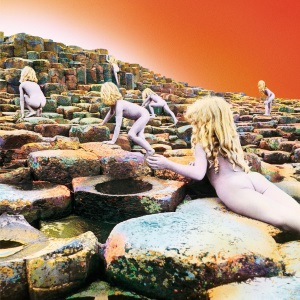

The Story
Released on March 28, 1973, Houses of the Holy marked a turning point for Led Zeppelin as the band deliberately expanded beyond the blues-based hard rock that defined their earlier records. Recording sessions took place across several locations, including Stargroves, Headley Grange, Olympic Studios, and Electric Lady Studios. By this stage, the group was experimenting more openly with arrangement, rhythm, and studio techniques, creating an album that emphasized stylistic variety rather than a single dominant sound. The result was a record that blended hard rock with funk influences, acoustic textures, progressive structures, and atmospheric production.
The album opens with The Song Remains the Same, a fast-paced track built around layered guitars and shifting dynamics. It leads directly into The Rain Song, which contrasts with a slow, melodic arrangement featuring acoustic guitar, orchestral textures, and gradual development. This pairing reflects the band’s growing interest in sequencing and dynamic contrast, a technique they had used previously but expanded further here. Over the Hills and Far Away continues the alternating structure, beginning with acoustic guitar before transitioning into a full electric arrangement, combining folk-inspired passages with heavier sections.
The Crunge introduces a different direction, drawing on funk rhythms and syncopated patterns. Its groove-based structure and playful vocal delivery highlight the band’s willingness to experiment with genre influences outside their established style. Dancing Days returns to a more familiar riff-driven approach, while D'yer Mak'er blends reggae-inspired rhythm with pop-oriented structure. These tracks illustrate the album’s emphasis on variety and the band’s interest in exploring new rhythmic territory.
No Quarter forms one of the album’s most atmospheric pieces, built around electric piano, layered textures, and a slower tempo. The track emphasizes mood and space, with extended instrumental passages and restrained vocals. The album closes with The Ocean, a more direct rock track featuring shifting rhythmic accents and a layered arrangement. The song’s structure incorporates multiple sections, reflecting the band’s continued interest in complex composition.
Houses of the Holy captures Led Zeppelin at a point where experimentation became central to their approach. Rather than focusing on a single sound, the album moves between heavy rock, acoustic material, funk-influenced grooves, and atmospheric compositions. The recording process across multiple studios and the band’s increased confidence in the studio contributed to a diverse but cohesive record. By expanding their stylistic range, the album demonstrated the group’s willingness to evolve beyond their earlier formula while maintaining their distinctive identity.