

The Story
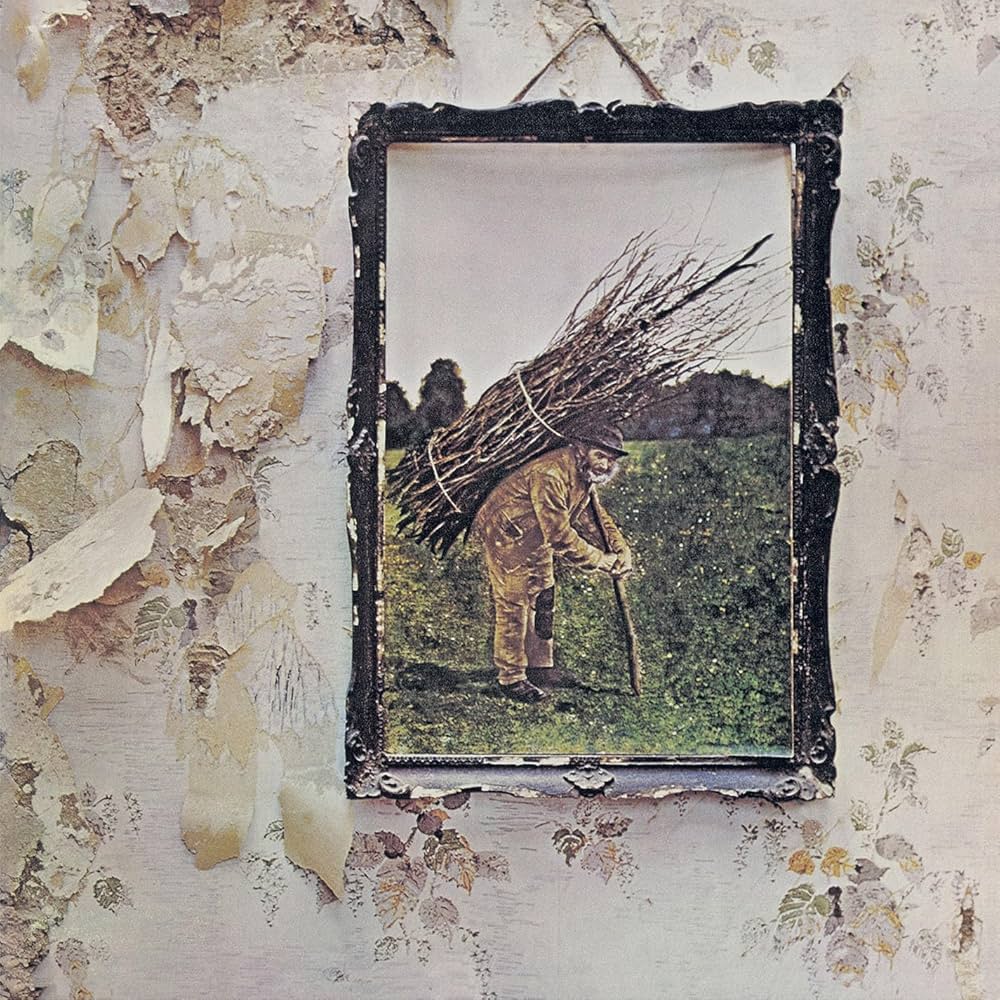
Released on November 8, 1971, Led Zeppelin’s fourth album arrived without an official title, band name, or identifying text on the cover. After mixed critical reactions to Led Zeppelin III, the group deliberately chose to let the music stand on its own, replacing traditional labeling with four individual symbols representing Jimmy Page, Robert Plant, John Paul Jones, and John Bonham. The album was recorded primarily in 1970 and 1971, with significant sessions taking place at Headley Grange, a country house in Hampshire, England. Recording in this informal setting allowed the band to experiment with acoustics, room sound, and arrangements, contributing to the album’s distinctive sonic character.
The record balances heavy electric rock with acoustic and folk-influenced material, reflecting the broader musical direction the band had begun exploring on their previous album. Black Dog opens with a complex, stop-start riff structured around shifting vocal and instrumental exchanges. The track’s rhythmic design emerged from collaborative experimentation, with John Paul Jones contributing to the arrangement. Rock and Roll follows with a more direct, high-energy performance inspired by early rock and roll, reportedly developing spontaneously during a rehearsal built around a drum pattern influenced by 1950s rock rhythms.
The Battle of Evermore introduces a dramatic stylistic shift. Built around mandolin and acoustic instrumentation, the song draws on folk traditions and features guest vocals by Sandy Denny. The track reflects Robert Plant’s interest in mythic imagery and narrative storytelling, themes that also appear elsewhere on the album. This acoustic atmosphere leads into Stairway to Heaven, which became the album’s centerpiece. The song begins with acoustic guitar and recorder textures before gradually building through multiple sections into a full electric arrangement. The structure was assembled collaboratively, with Jimmy Page developing the musical framework and Robert Plant writing lyrics during the recording period. The gradual progression from quiet introduction to climactic finale helped define the track’s lasting impact and its role within the album’s sequencing.
The second half continues the album’s contrasts. Misty Mountain Hop returns to a heavier groove built around electric piano and guitar, while Four Sticks features unusual rhythmic accents and layered instrumentation. Going to California moves back to acoustic territory, reflecting a quieter and more introspective tone shaped by acoustic guitar and vocal harmony. The album closes with When the Levee Breaks, built around a slow, powerful rhythm recorded in the stairwell at Headley Grange. The drum sound, combined with harmonica and layered guitar textures, creates a dense and atmospheric conclusion that emphasizes the album’s emphasis on production and sonic experimentation.
Led Zeppelin IV combines electric intensity, acoustic arrangements, and blues influence into a cohesive sequence. The recording environment, the decision to release the album without a title, and the collaborative development of key tracks all contributed to its identity. By balancing heavy rock with folk-inspired material and emphasizing dynamic contrast, the album captured the band at a peak of creative range and became one of their most widely recognized releases.