
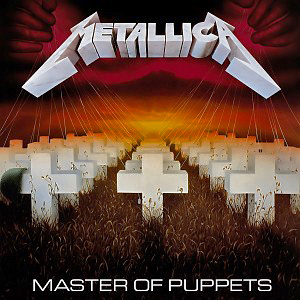

The Story
Released on March 3, 1986, Master of Puppets marked a major step forward for Metallica and became one of the most influential albums in thrash metal. Following Ride the Lightning, the band entered Sweet Silence Studios in Copenhagen with producer Flemming Rasmussen to create a heavier and more sophisticated record. Guitarists James Hetfield and Kirk Hammett developed layered rhythm and lead arrangements, while bassist Cliff Burton contributed harmonic ideas and instrumental textures that expanded the band’s sound. The album emphasized long-form compositions, dynamic contrasts, and precise musicianship while retaining the aggression that defined their earlier work.
Battery opens with a clean, acoustic guitar introduction that transitions abruptly into fast, palm-muted riffing. This contrast between melody and intensity sets the tone for the album’s dynamic structure. The title track Master of Puppets follows as the centerpiece, built around multiple sections including fast riffs, a slower melodic interlude, and harmonized guitar lines. The song’s arrangement demonstrates the band’s shift toward complex, multi-part compositions. The Thing That Should Not Be slows the pace with a heavier, deliberate groove, emphasizing low-end guitar tone and atmospheric tension.
Welcome Home (Sanitarium) introduces a quieter opening before building into heavier passages, continuing the loud-quiet dynamic used throughout the album. Disposable Heroes returns to fast tempo and extended structure, driven by rapid rhythm guitar and intricate drumming. Leper Messiah provides a mid-tempo groove with shifting sections and layered guitars.
Orion serves as the album’s instrumental centerpiece. The track moves through several sections, including melodic bass passages, harmonized guitar leads, and tempo changes. Cliff Burton’s influence is particularly prominent, with bass lines functioning as melodic elements rather than purely rhythmic support. The closing track Damage, Inc. begins with a quiet introduction before transitioning into fast, aggressive riffing and a rapid tempo, ending the album with intensity.
Master of Puppets balances speed, technical precision, and compositional complexity. The album features extended arrangements, acoustic interludes, and harmonized guitars alongside aggressive thrash riffs. Recorded with emphasis on tight performance and layered production, the record expanded the boundaries of thrash metal. As the final Metallica album featuring Cliff Burton, it captured the band at a pivotal moment, combining raw aggression with increasingly sophisticated songwriting and becoming one of the genre’s most influential releases.