


The Story
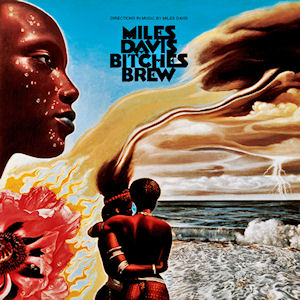
Bitches Brew was the album where Miles Davis pushed his electric period into a new, disruptive form. Recorded for Columbia in New York over three days in August 1969 and released in March 1970, it followed In a Silent Way but was louder, denser, darker, and more confrontational. Davis had already begun moving away from the small-group acoustic jazz language that had defined much of his 1950s and 1960s work. On Bitches Brew, he gathered a large ensemble and used electric pianos, electric guitar, multiple percussionists, electric bass, and layered studio editing to create a sound that felt closer to a ritual than to a conventional jazz session.
The personnel showed how carefully Davis built the album's world. The sessions included Wayne Shorter, Bennie Maupin, Chick Corea, Joe Zawinul, Larry Young, John McLaughlin, Dave Holland, Harvey Brooks, Lenny White, Jack DeJohnette, Don Alias, Juma Santos, and Airto Moreira, among others. Instead of giving the musicians fully written arrangements, Davis worked from sketches, riffs, tonal centers, and directions. The players were asked to listen, react, and build long collective performances around grooves and atmosphere. Producer Teo Macero then played a major role in shaping the finished album, using editing and tape construction to turn the sessions into the final double LP.
The opening track, 'Pharaoh's Dance', written by Joe Zawinul, immediately announced that this was not traditional hard bop or post-bop. Its shifting electric keyboards, bass movement, horn fragments, and edited structure created a maze-like entrance into the record. The title track stretched even further, with Davis's trumpet cutting through a heavy, churning ensemble texture. 'Spanish Key' brought a sharper rhythmic drive, while 'John McLaughlin' highlighted the guitarist whose playing became one of the album's defining electric voices. 'Miles Runs the Voodoo Down' connected the record most clearly to funk and rock rhythm, and 'Sanctuary' closed the album by transforming a Wayne Shorter composition into something slow, suspended, and ominous.
At the time, Bitches Brew divided listeners. Some jazz audiences saw it as a break from the tradition Davis had helped define, while others recognized it as another act of reinvention from a musician who had already changed jazz more than once. Its use of rock volume, funk rhythm, electric texture, and studio construction made it a foundational album for jazz fusion, even though the record itself remains stranger and less polished than much of the fusion that followed. It was commercially successful by jazz standards, became Davis's first gold-certified album in the United States, and later reached platinum status.
The album's importance lies in its refusal to make the transition from jazz to electric music neat or comfortable. Bitches Brew is not simply jazz with rock instruments; it is a large-scale reimagining of how improvisation, groove, editing, noise, space, and ensemble energy could work together. For Miles Davis, it was another radical turn. For later generations, it became one of the central documents of electric jazz and one of the most influential recordings of the 1970s.