
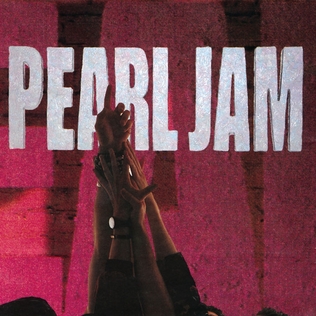
Ten
By Pearl Jam
The Story
Ten marked the arrival of Pearl Jam as one of the central bands of the early 1990s alternative rock movement, emerging from the Seattle music scene at a time when grunge was beginning to reach a global audience. Released in 1991, the album was shaped by the collaboration between guitarist Stone Gossard, bassist Jeff Ament, guitarist Mike McCready, drummer Dave Krusen, and vocalist Eddie Vedder, whose distinctive voice and lyrical approach quickly became a defining feature of the band's identity.
Much of the music for Ten originated from instrumental demos created by Gossard and Ament, which were later given new life when Vedder added lyrics and vocal melodies. His contributions introduced deeply personal and often intense narratives, many of which drew from his own experiences. This combination of emotionally direct lyrics and powerful instrumentation gave the album a sense of authenticity that resonated strongly with listeners.
The opening track 'Once' sets the tone with a dark and driving energy, leading into songs that explore themes of isolation, identity, and trauma. 'Alive' became one of the band's most recognized tracks, blending an anthemic musical structure with lyrics that reflect complex personal history. 'Even Flow' captures a more immediate and rhythmic intensity, while 'Jeremy' tells a story inspired by real-life events, addressing themes of alienation and violence in a way that drew widespread attention.
At the same time, Ten includes moments of introspection and restraint. 'Black' stands out as one of the album's most emotional songs, focusing on loss and unfulfilled love, while 'Release' closes the album with a reflective and atmospheric tone. Tracks like 'Oceans' and 'Garden' further expand the album's range, balancing heavier material with more melodic and textured arrangements.
Produced by Rick Parashar, the album features a layered and polished sound that differs from the rawer production associated with some of its contemporaries. While this approach initially received mixed reactions from some within the alternative scene, it contributed to the album's broad appeal and accessibility. Over time, Ten underwent remixing and re-evaluation, reflecting ongoing discussions about its sonic identity.
Commercially, the album achieved significant success, though its rise was gradual rather than immediate. As singles gained attention and the band's popularity grew, Ten became one of the best-selling albums of the era, helping to define the sound and reach of grunge beyond its regional origins. Its songs became staples of radio and live performances, reinforcing the band's connection with audiences.
In retrospect, Ten stands as a foundational release that helped shape the direction of alternative rock in the 1990s. It captures a moment of emergence, where personal expression, musical intensity, and broader cultural shifts came together. For Pearl Jam, it established a lasting identity built on emotional honesty and powerful songwriting, elements that continue to define their work.