
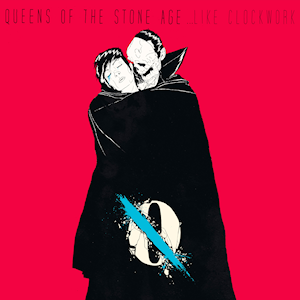

The Story
Released on June 3, 2013, ...Like Clockwork marked Queens of the Stone Age’s return after a six-year gap and emerged from a difficult period for Josh Homme. In 2010, Homme experienced serious health complications following surgery, which led to a long recovery and forced him to reassess both his personal life and creative direction. The album developed gradually during this time, with Homme working on material that reflected isolation, vulnerability, and uncertainty. Unlike earlier records built around a consistent band lineup, the sessions featured a wide range of collaborators, including returning members and guest musicians, contributing to a layered and varied sound.
Keep Your Eyes Peeled opens with a slow, tense build, establishing the album’s darker tone. I Sat by the Ocean follows with a more melodic structure, contrasting the opening’s heaviness. The Vampyre of Time and Memory shifts into a piano-driven arrangement, reflecting introspection and emotional restraint. These early tracks set the album’s balance between minimalism and dynamic expansion.
If I Had a Tail introduces a groove-based structure with layered instrumentation, while My God Is the Sun returns to a heavier, riff-driven approach. Kalopsia blends atmospheric passages with louder sections, continuing the album’s emphasis on contrast. Fairweather Friends builds gradually with shifting dynamics, and Smooth Sailing introduces a more rhythmic, confident tone.
I Appear Missing forms one of the album’s central pieces, moving from quiet introduction to extended instrumental development. The track reflects the album’s recurring themes of recovery and uncertainty. The closing track, ...Like Clockwork, returns to a restrained arrangement built around piano and minimal accompaniment, providing a reflective conclusion.
...Like Clockwork presents a more introspective direction for Queens of the Stone Age. The album combines heavy riffs with quieter passages, emphasizing mood and pacing. Shaped by personal circumstances and collaborative recording sessions, the record explores vulnerability, recovery, and change. The sequencing moves from tension to reflection, creating a cohesive narrative that contrasts with the band’s earlier, more abrasive releases.