

The Story
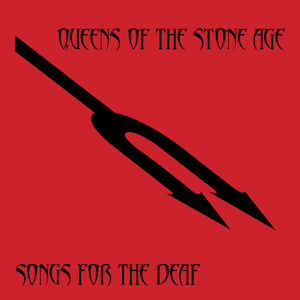
Released on August 27, 2002, Songs for the Deaf became Queens of the Stone Age’s breakthrough album and was conceived as a loose concept record built around the experience of driving through the California desert while scanning radio stations. The album is structured with interludes and DJ segments that simulate radio broadcasts, creating the feeling of a continuous drive where songs appear as transmissions between stations. Josh Homme developed the concept with contributions from Nick Oliveri and Mark Lanegan, while Dave Grohl joined the sessions on drums, bringing a heavier and more dynamic rhythmic presence that shaped the album’s sound.
The record opens abruptly with You Think I Ain't Worth a Dollar, But I Feel Like a Millionaire, immediately establishing intensity before transitioning into radio-style voiceovers. No One Knows follows with a distinctive groove and became the album’s most recognizable track, combining melodic vocals with heavy riffing. First It Giveth continues the driving rhythm, while Song for the Dead features aggressive drumming and shifting dynamics, reflecting the album’s emphasis on momentum and movement.
The Sky Is Fallin' slows the pace with layered textures, contrasted by the brief burst of Six Shooter. Hangin' Tree introduces Mark Lanegan on vocals, adding a darker tone. Go with the Flow returns to a tight, driving structure and became one of the album’s key singles. Gonna Leave You and Do It Again continue the alternating pacing between heavy and restrained passages.
God Is in the Radio expands into a slower, atmospheric arrangement, highlighting layered instrumentation. Another Love Song shifts toward a more melodic approach, while Song for the Deaf returns to the conceptual theme, incorporating radio static and commentary that reinforces the driving narrative. The closing track, Mosquito Song, moves into acoustic territory, ending the album with a quieter and reflective tone that contrasts with the earlier intensity.
Songs for the Deaf blends heavy riffs, melodic passages, and conceptual sequencing into a cohesive listening experience. The radio interludes and desert-drive concept unify the album while allowing stylistic variety. With contributions from multiple vocalists and Dave Grohl’s drumming, the record expanded Queens of the Stone Age’s sound and established the band’s wider recognition, combining conceptual framing with dynamic rock arrangements.