
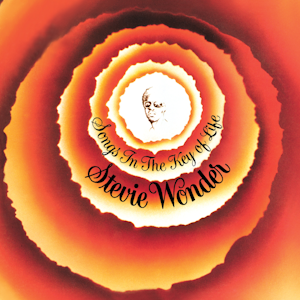
Songs in the Key of Life
By Stevie Wonder
The Story
Songs in the Key of Life arrived in 1976 as the grand culmination of Stevie Wonder's extraordinary 1970s creative run. After Music of My Mind, Talking Book, Innervisions, and Fulfillingness' First Finale, Wonder had become one of the rare popular musicians whose commercial success, artistic control, and critical reputation all seemed to rise together. Instead of following those albums with a safer single-disc statement, he spent roughly two years shaping a vast double album packaged with the additional A Something's Extra EP, creating one of the most ambitious soul records ever released by a major pop artist.
The album was made during a period when Wonder had unusual leverage with Motown. He wrote, produced, arranged, and performed across the project, while also drawing on a large circle of musicians and singers. The record's scale matched its title. Rather than focus on one mood or one concept, Songs in the Key of Life tries to hold an entire world: romantic devotion, childhood memory, spiritual faith, political anger, Black history, urban poverty, musical tribute, family joy, and cosmic imagination. Its sound moves through soul, funk, R&B, jazz, pop, Latin rhythm, gospel feeling, and orchestral color without losing Wonder's melodic identity.
The opening 'Love's in Need of Love Today' sets the album's moral tone with a plea for compassion that is gentle in sound but serious in purpose. 'Village Ghetto Land' places harsh images of poverty against an elegant synthetic string arrangement, creating one of the album's sharpest contrasts between beauty and social reality. 'Sir Duke' is Wonder's joyous tribute to Duke Ellington and other jazz greats, turning musical history into one of the album's brightest singles. 'I Wish' looks back to childhood with a hard funk groove, while 'Pastime Paradise' uses a hypnotic arrangement and spiritual weight to warn against nostalgia, complacency, and social division.
The album's emotional range is one of its defining strengths. 'Isn't She Lovely' celebrates the birth of Wonder's daughter Aisha Morris and includes the sound of her as a baby, making it one of his most personal and widely loved recordings. 'Knocks Me Off My Feet', 'Joy Inside My Tears', and 'As' show his ability to write love songs that feel intimate but expansive, while 'Black Man' turns historical recognition into a long, educational funk statement about the contributions of people from different racial and cultural backgrounds, with special emphasis on Black achievement.
Songs in the Key of Life was also a commercial event. It debuted at number one on the Billboard album chart, produced major singles including 'I Wish' and 'Sir Duke', and won Album of the Year at the Grammy Awards, making Wonder the first artist to win that prize three times. Its success confirmed that a long, musically wide-ranging, socially conscious soul album could still become a mainstream blockbuster.
The album's lasting power comes from its generosity. It is not perfect because it is concise or restrained; it is great because it is overflowing. Wonder uses the space to celebrate life, confront injustice, honor musical ancestors, imagine better futures, and turn private feeling into public song. Songs in the Key of Life remains one of the clearest documents of Stevie Wonder's genius: a record where technical mastery, moral imagination, and melodic warmth all operate on a massive scale.