


The Story
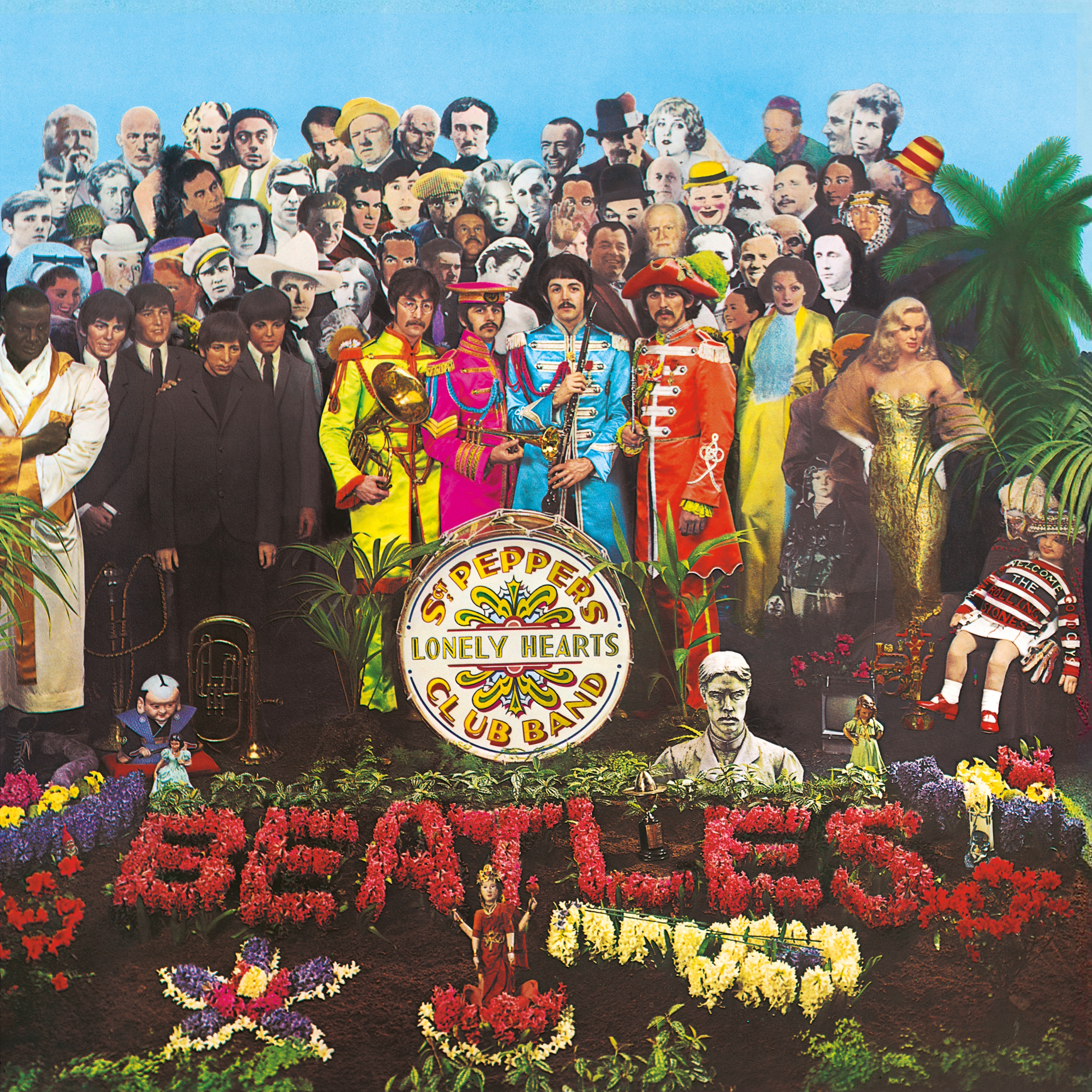
Released on June 1, 1967, Sgt. Pepper's Lonely Hearts Club Band marked a major turning point for the Beatles as they moved away from touring and focused entirely on studio experimentation. After retiring from live performances in 1966, the band used the recording studio as a creative tool, working extensively with producer George Martin and engineer Geoff Emerick. The concept loosely framed the album as a performance by a fictional band, allowing the group to explore different musical styles and characters across the tracklist.
The album opens with the title track, which introduces the fictional band before transitioning into With a Little Help from My Friends, sung by Ringo Starr. Lucy in the Sky with Diamonds follows with layered instrumentation and shifting sections, while Getting Better and Fixing a Hole continue the melodic and experimental direction. She's Leaving Home introduces orchestral arrangement, contrasting with the collage-like production of Being for the Benefit of Mr. Kite!, which uses tape manipulation and layered sound effects.
Within You Without You features Indian instrumentation and a meditative structure, expanding the album’s stylistic range. When I'm Sixty-Four returns to a lighter tone, followed by Lovely Rita and Good Morning Good Morning, which emphasize layered arrangements and varied instrumentation. The Sgt. Pepper reprise returns to the concept before leading into the closing track.
A Day in the Life combines separate song sections with orchestral crescendos and studio experimentation. The track’s structure and production techniques reflect the album’s broader emphasis on innovation. The final sustained piano chord provides a distinctive ending.
Sgt. Pepper's Lonely Hearts Club Band blends psychedelic rock, orchestration, and studio experimentation. The album moves between styles while maintaining a loose conceptual framework. By treating the studio as an instrument and incorporating diverse influences, the Beatles created a cohesive and influential record that expanded possibilities for album-oriented rock.