
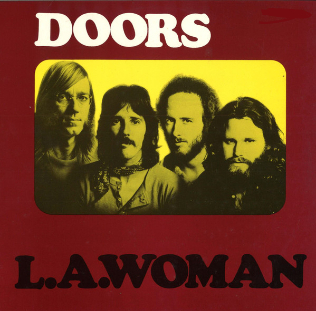
L.A. Woman
By The Doors
The Story
L.A. Woman stands as both a return to roots and a final statement from the classic lineup of The Doors. Released in 1971, the album was recorded during a turbulent period for the band, marked by legal issues surrounding Jim Morrison and growing tensions within the group. After working with producer Paul A. Rothchild on their previous albums, the band chose to move forward without him, effectively producing the record themselves with engineer Bruce Botnick. This shift allowed them to pursue a looser, more direct sound, drawing heavily from blues influences that had always been part of their identity.
Much of the album was recorded in a makeshift studio set up in their rehearsal space on Santa Monica Boulevard, contributing to its raw and immediate feel. The sessions captured a band reconnecting with the basics of performance, often recording live takes with minimal overdubbing. This approach is evident in tracks like 'Been Down So Long' and 'Cars Hiss by My Window', which emphasize groove and atmosphere over elaborate production. The blues foundation is also clear in their interpretation of 'Crawling King Snake', a song associated with John Lee Hooker, further grounding the album in traditional influences.
At the same time, L.A. Woman retains the band's signature sense of mood and narrative. The title track, 'L.A. Woman', serves as a portrait of Los Angeles, blending imagery of the city with a sense of movement and identity. It reflects both Morrison’s connection to and disillusionment with the environment around him. 'Love Her Madly' offers a more accessible and melodic contrast, becoming one of the album’s more commercially successful songs.
One of the album’s defining moments comes with 'Riders on the Storm', a track that merges atmospheric sound design with a jazz-influenced structure. Built around Ray Manzarek’s electric piano and Robby Krieger’s subtle guitar work, the song incorporates elements such as thunderstorm effects and layered vocal takes, creating a sense of space and unease. Morrison’s lyrics, inspired in part by real-life events and broader themes of danger and isolation, add to the track’s haunting quality.
Throughout the album, Morrison’s vocal performances carry a sense of distance and introspection. Shortly after recording was completed, he traveled to Paris, where he died later that year, giving the album an added sense of finality in retrospect. Tracks like 'Hyacinth House' and 'The WASP (Texas Radio and the Big Beat)' reflect a more reflective and poetic side, while still fitting within the album’s overall blues-driven framework.
L.A. Woman is often regarded as one of The Doors’ strongest albums, combining their early influences with the experience they had gained over the course of their career. By stepping away from heavier studio experimentation and focusing on a more organic sound, the band created a record that feels both immediate and enduring. It captures The Doors at a moment of transition, delivering a powerful closing chapter to their work with Jim Morrison while reaffirming the core elements that defined their music.