
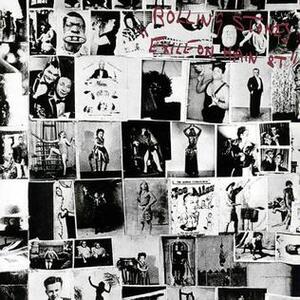
Exile on Main St.
By The Rolling Stones
The Story
Exile on Main St. is the Rolling Stones album most often described as the band's great act of immersion: a double record that seems to gather blues, country, gospel, soul, boogie, and rock and roll into one hot, crowded room. Released in 1972 on Rolling Stones Records, it followed the classic run of Beggars Banquet, Let It Bleed, and Sticky Fingers, but it did not present itself with the same clean outlines as those albums. Exile sounded murkier, looser, and more lived-in, as if the music had been dug out rather than assembled.
The album's history is inseparable from the band's move to France after leaving Britain for tax reasons. Much of the recording took place in the basement of Villa Nellcote, Keith Richards' rented house near Villefranche-sur-Mer, using the Rolling Stones Mobile Studio. The conditions were far from ideal: the rooms were hot, the setup was makeshift, and the sessions were irregular. That disorder became part of the record's mythology, but the finished album was not simply a document of chaos. Additional work and overdubs at Sunset Sound in Los Angeles helped shape the final double LP, with Jimmy Miller again producing and key supporting players such as Nicky Hopkins, Bobby Keys, Jim Price, Ian Stewart, and Billy Preston adding piano, horns, organ, and other colors.
Exile on Main St. opens in motion. 'Rocks Off' and 'Rip This Joint' throw the listener straight into the band's roughest rock-and-roll energy, while Slim Harpo's 'Shake Your Hips' and Robert Johnson's 'Stop Breaking Down' show how deeply the Stones were still drawing from American blues. 'Tumbling Dice' became the album's most famous single, built around a gambling image and a groove that feels both relaxed and unstoppable. 'Sweet Virginia' and 'Torn and Frayed' lean toward country and gospel textures, presenting the Stones not as outsiders borrowing a style for novelty, but as musicians who had absorbed those forms into their own language.
The record also gives Keith Richards one of his defining lead-vocal moments with 'Happy', a song cut quickly during the Nellcote sessions and later released as a single. Elsewhere, the album moves into darker and stranger spaces: 'Ventilator Blues' is heavy and claustrophobic, 'I Just Want to See His Face' sounds almost like a fragment of ghostly gospel caught in passing, and 'Let It Loose' turns soul influence into one of the band's most emotionally expansive performances. The closing stretch, from 'All Down the Line' through 'Shine a Light' and 'Soul Survivor', gathers the album's roughness into something almost triumphant without ever becoming polished.
At first, Exile on Main St. received a mixed response from some critics who found it dense and difficult to penetrate. Over time, its reputation changed dramatically, and it came to be regarded as one of the Rolling Stones' greatest achievements. Its power lies in the way it refuses neatness. It is not a clean concept album or a simple collection of singles. It is a world of sound: guitars bleeding into horns, voices buried in the mix, gospel feeling beside barroom rock, blues tradition beside the excess and fatigue of a band living through its own legend. More than any other Stones album, Exile on Main St. feels like the whole messy history of rock and roll passing through them at once.