
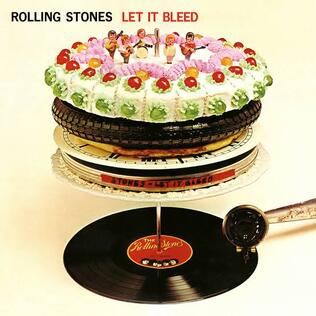
Let It Bleed
By The Rolling Stones
The Story
Let It Bleed arrived at the end of 1969 as one of The Rolling Stones' darkest and most enduring albums. It followed Beggars Banquet and pushed the band deeper into American blues, country, gospel, and hard rock at a moment when the idealism of the 1960s was giving way to violence, exhaustion, and disillusionment. The album was recorded across a long stretch between 1968 and 1969, mainly at Olympic Studios in London, and was produced by Jimmy Miller, whose work helped define the Stones' late-1960s and early-1970s sound.
The record also captures a major transition inside the band. Brian Jones, once central to the Stones' sound and image, was largely absent from the album's creation and appears only minimally. He was dismissed from the group in June 1969 and died the following month. His replacement, Mick Taylor, also appears on the album, but Let It Bleed is still mainly driven by Mick Jagger, Keith Richards, Charlie Watts, Bill Wyman, and the expanding circle of musicians around them. That in-between quality gives the record part of its historical weight: it is both the last album connected to Jones and the first to point toward the Taylor-era Stones.
The opening track, 'Gimme Shelter', immediately sets the album's apocalyptic tone. Built on Keith Richards' tense guitar figure and lifted by Merry Clayton's dramatic guest vocal, the song became one of the band's defining statements about fear, danger, and social collapse. At the other end of the album, 'You Can't Always Get What You Want' turns gospel choir, French horn, and gradual rock build-up into a strange kind of consolation. Together, those two songs frame the record as a journey from threat to weary acceptance.
Between them, Let It Bleed moves through several versions of American roots music. 'Love in Vain' adapts Robert Johnson's blues into a slow, mournful performance. 'Country Honk' recasts the same song idea as the Stones' single 'Honky Tonk Women' in a rougher country form. 'Live with Me' brings a harder, seedier rock sound and is notable for Bobby Keys' saxophone, while 'You Got the Silver' gives Keith Richards one of his first lead vocal showcases on a Rolling Stones album. 'Midnight Rambler', inspired by the crimes of the Boston Strangler, is one of the band's most disturbing blues-based pieces, stretching menace and dynamics into a performance that became even more powerful on stage.
Let It Bleed was released only a day before the Altamont Free Concert, where a fan was killed during the Stones' set. The album was not written about that event, but its atmosphere became inseparable from the period: dread, desire, violence, survival, and the collapse of 1960s innocence. It reached number one in the United Kingdom and number three in the United States, and over time became one of the central albums in the Rolling Stones' classic run from Beggars Banquet through Exile on Main St. Its greatness lies in how naturally it turns chaos into music: rough, haunted, sensual, blues-rooted, and unmistakably alive.