
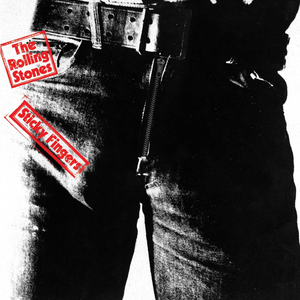
Sticky Fingers
By The Rolling Stones
The Story
Sticky Fingers marked a new chapter for The Rolling Stones. Released in 1971, it was the first album issued on the band's own Rolling Stones Records label after the end of their long association with Decca in the UK and London Records in the US. It was also the first Stones studio album without Brian Jones, who had died in 1969, and the first full studio statement of the Mick Taylor era. Taylor's melodic lead guitar gave the band a smoother and more fluid counterweight to Keith Richards' rhythm work, helping shape one of the richest guitar albums in the Stones' catalog.
The album was recorded across several sessions between 1969 and 1970, with work taking place at Muscle Shoals Sound Studio in Alabama, Olympic and Trident Studios in London, and Stargroves using the Rolling Stones Mobile Studio. Jimmy Miller, who had produced Beggars Banquet and Let It Bleed, returned as producer, keeping the band close to the blues, country, soul, and hard rock language that had defined their strongest late-1960s work. Sticky Fingers feels less apocalyptic than Let It Bleed and less sprawling than Exile on Main St.; its power comes from concentration, swagger, and the way the band moves between toughness and wounded beauty.
'Brown Sugar' opens the record with one of the band's most famous riffs and one of their most controversial lyric sheets. The song became a major hit, but its subject matter has been widely criticized, and in later decades the band stopped performing it live. 'Sway' and 'Can't You Hear Me Knocking' show the strength of Mick Taylor's arrival, especially the latter's long Latin-tinged jam section, which stretches the song beyond hard rock into something looser and more improvisational. 'Wild Horses', recorded after the band's 1969 visit to Muscle Shoals, became one of the Stones' most enduring ballads, blending country feeling with emotional restraint.
The second side deepens the album's roots-music character. 'You Gotta Move' reaches back to Mississippi Fred McDowell's blues tradition, while 'Dead Flowers' turns country music into something wry, bitter, and unmistakably Stones-like. 'I Got the Blues' leans into Southern soul, and 'Sister Morphine', co-written by Marianne Faithfull, brings a darker and more fragile mood to the album. The closing 'Moonlight Mile' is one of the record's most atmospheric pieces, with Mick Jagger's vocal and Paul Buckmaster's string arrangement giving the album a reflective ending far removed from the swagger of its opening.
Sticky Fingers also became famous as an object. Its original Andy Warhol-conceived cover, packaged with a working zipper and Craig Braun's design execution, was one of the most provocative album sleeves of the era. The record also introduced the Stones' tongue-and-lips logo, which quickly became one of rock music's most recognizable visual symbols.
The album reached number one in both the UK and the US and became one of the central works in the Stones' classic run from Beggars Banquet through Exile on Main St. Its lasting force comes from how completely it gathers the band's identities into one place: blues interpreters, country outsiders, soul students, decadent rock stars, and a working band capable of turning rough material into something elegant, dangerous, and deeply alive.