
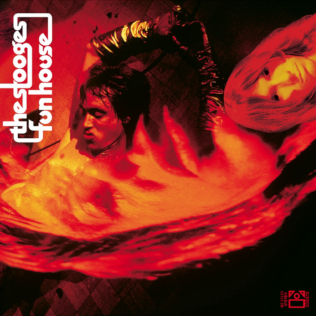
Fun House
By The Stooges
The Story
Released on July 7, 1970, Fun House marked a defining moment for The Stooges and pushed their sound into a more raw and aggressive direction. Following their debut album, the band—featuring Iggy Pop, Ron Asheton, Dave Alexander, and Scott Asheton—entered the studio with producer Don Gallucci aiming to capture the intensity of their live performances. Rather than relying on layered studio production, the sessions focused on recording the band playing together in the same room, emphasizing immediacy and energy over precision.
The recording setup played a key role in shaping the album’s sound. The band performed at high volume, often recording full takes live, with minimal overdubs. This approach resulted in a dense, unpolished sound where instruments blend together while still maintaining a strong sense of rhythm and momentum. The addition of saxophonist Steve Mackay further expanded the band’s sonic range, introducing free-form elements that contributed to the album’s chaotic atmosphere.
Down on the Street opens the album with a steady groove and repetitive structure, establishing the hypnotic quality that runs throughout the record. Loose and T.V. Eye continue the aggressive pacing, combining simple riffs with raw vocal delivery. Dirt slows the tempo, introducing a heavier, more atmospheric tone built around repetition and sustained tension.
1970 returns to a faster pace, featuring extended sections that highlight the band’s live improvisational style. The title track Fun House blends driving rhythm with saxophone interplay, creating a layered and evolving arrangement. The closing track L.A. Blues abandons traditional structure entirely, moving into free-form noise and improvisation that pushes the album into more experimental territory.
Fun House emphasizes repetition, volume, and raw performance. The album strips rock music down to its essential elements, focusing on rhythm and energy rather than complexity. With its live-in-the-room recording style and minimal production, the record captured a level of intensity that would influence later developments in punk and alternative rock. As a release, it represents a shift toward a more direct and confrontational form of rock music.