
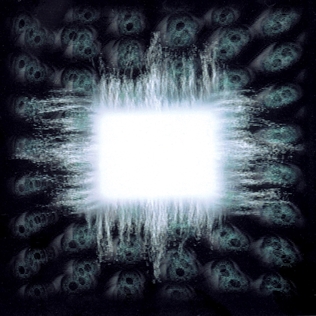
Ænima
By Tool
The Story
Ænima was the album where Tool moved from a promising heavy alternative band into something stranger, darker, and more fully their own. Released in 1996 through Zoo and Volcano, it was the band's second studio album and the first to feature bassist Justin Chancellor, who replaced original bassist Paul D'Amour before the recording. The album was produced by Tool with David Bottrill and recorded at Ocean Way in Hollywood and The Hook in North Hollywood, giving the band a larger and more detailed sound than on Undertow.
The title itself captures the album's mixture of seriousness and provocation. Ænima joins the Jungian idea of the anima, connected to the inner self, with the crude cleansing image of an enema. That collision runs through the record: spiritual searching, psychological pressure, bitter humor, disgust with modern culture, and a desire to purge what feels false. Maynard James Keenan's lyrics often move between personal trauma, social criticism, satire, and esoteric references, while Adam Jones, Justin Chancellor, and Danny Carey build music that is heavy but rarely straightforward.
Compared with Undertow, Ænima is more spacious, more rhythmically complex, and more psychedelic. Songs such as 'Stinkfist', 'H.', 'Forty Six & 2', 'Pushit', and 'Third Eye' stretch Tool's metal foundation into long, tense structures that rely on repetition, release, silence, and sudden impact. Danny Carey's drumming became central to the album's identity, combining force with unusual patterns and a sense of ritual movement. Chancellor's bass also changed the band's texture, giving tracks such as 'Forty Six & 2' a fluid, muscular low end that helped define Tool's later sound.
The album also uses short interludes and disturbing fragments to make the whole record feel like a connected psychological environment rather than a simple collection of songs. 'Useful Idiot', 'Message to Harry Manback', 'Intermission', 'Die Eier von Satan', 'Cesaro Summability', and '(-) Ions' interrupt the main pieces with noise, absurdity, menace, or dark comedy. These moments made Ænima harder to reduce to radio singles, but they strengthened its atmosphere and gave the album its uneasy, immersive character.
Comedian Bill Hicks was an important presence around the record's meaning. The album was dedicated to him, and 'Third Eye' includes samples from his performances. The song 'Ænema' also echoes Hicks's apocalyptic satire about Los Angeles and cultural decay, turning disgust with the city into one of Tool's most memorable and aggressive tracks. 'Ænema' later won the Grammy Award for Best Metal Performance, confirming that even Tool's most caustic material had crossed into a wider audience.
Ænima debuted at number two on the Billboard 200 and was later certified multi-platinum in the United States. Its lasting importance comes from how completely it expanded the possibilities of 1990s heavy music. It was too progressive and inward-looking to be simple alternative metal, too abrasive and strange to be mainstream rock, and too carefully constructed to be only aggression. Ænima became the blueprint for Tool's mature identity: heavy music as psychological architecture, built from riffs, symbols, tension, satire, and the uneasy promise of transformation.