
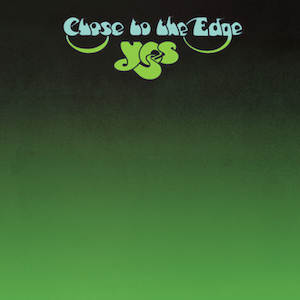
Close to the Edge
By Yes
The Story
Close to the Edge is widely regarded as the defining statement of Yes and one of the most ambitious works of the progressive rock era. Released in 1972, the album captured the band at a peak of creative confidence, following a period of rapid development that had seen them expand their musical language and embrace longer, more complex compositions. With a lineup featuring Jon Anderson, Chris Squire, Steve Howe, Rick Wakeman, and Bill Bruford, the band brought together a combination of technical precision and expansive vision that shaped the album’s identity.
The recording process reflected the album’s complexity. Much of the material was developed through extended rehearsals and improvisations before being carefully structured in the studio. Producer Eddy Offord worked closely with the band to translate these evolving ideas into a cohesive recording, using multi-layered arrangements and detailed editing to assemble the final pieces. The result is an album that balances spontaneity with meticulous construction, where intricate instrumental passages are woven into larger, unified compositions.
The title track, which occupies the entire first side of the original vinyl release, stands as the album’s centerpiece. Divided into multiple sections, it moves through contrasting moods, from atmospheric openings to energetic instrumental interplay and vocal harmonies. The piece draws on a wide range of influences, including classical structures and spiritual themes, reflecting Jon Anderson’s interest in philosophical and literary ideas. Despite its length and complexity, the composition maintains a sense of continuity through recurring motifs and dynamic shifts.
The second side continues this approach with two extended pieces that explore different aspects of the band’s sound. 'And You and I' emphasizes melody and atmosphere, combining acoustic textures with gradual builds and reflective passages. In contrast, 'Siberian Khatru' presents a more energetic and rhythmically driven performance, highlighting the technical interplay between the musicians. Together, these tracks reinforce the album’s balance between complexity and accessibility.
Close to the Edge also marked a moment of transition for the band. Drummer Bill Bruford left shortly after the album’s completion, making it his final studio recording with Yes for many years. His precise and inventive playing contributes significantly to the album’s character, particularly in its shifting rhythms and intricate arrangements.
The album achieved both critical acclaim and commercial success, helping to solidify Yes as a leading force in progressive rock. It demonstrated that ambitious, long-form compositions could reach a wide audience without sacrificing artistic intent. Over time, Close to the Edge has remained a benchmark within the genre, often cited for its influence on subsequent progressive and experimental music.
In retrospect, the album represents a moment when musical ambition, technical skill, and creative exploration aligned. It captures Yes at their most focused and expansive, delivering a work that continues to be studied and appreciated for its structure, performance, and lasting impact.