
Alice In Chains
Biography
Alice In Chains came out of Seattle, but they never sounded quite like anyone else from Seattle. While the band was often grouped with the grunge movement of the early 1990s, its roots reached deeper into heavy metal, hard rock, acoustic folk, bluesy doom, and the strange emotional chemistry between guitarist Jerry Cantrell and singer Layne Staley. Where some of their peers leaned toward punk speed or loose garage-rock energy, Alice In Chains built songs like heavy machinery: slow, grinding riffs, minor-key melodies, and vocal harmonies that seemed to rise out of darkness rather than float above it.
The band began to take shape in the late 1980s, when Cantrell crossed paths with Staley in Seattle. Cantrell was a serious guitarist with a deep love of Black Sabbath, Van Halen, Elton John, country music, and classic rock songcraft. Staley had come from the local glam-metal scene, fronting an earlier group called Alice N' Chains, a name that carried a playful hair-metal flavor before it became attached to something far heavier. Cantrell was impressed by Staley's voice, not only its power but its tone: nasal, wounded, defiant, and instantly recognizable. Staley, in turn, gave Cantrell's thick riffs a human face. Together with bassist Mike Starr and drummer Sean Kinney, they formed the lineup that would become Alice In Chains.
Early Alice In Chains were not yet the bleak, disciplined force they later became. They played Seattle clubs at a time when the city's rock scene was still a local ecosystem rather than an international brand. Soundgarden, Mother Love Bone, Mudhoney, Nirvana, and other bands were part of the same broader moment, but Alice In Chains stood slightly apart. They were heavier and more metallic than many of the Sub Pop-associated acts, and Cantrell's guitar writing had a precision that owed as much to arena rock and metal as it did to underground noise. The band signed with Columbia Records and worked with producer Dave Jerden on its debut album, 'Facelift', released in 1990.
'Facelift' was the first major statement of the band's identity. It arrived before the mainstream explosion of grunge, and at first it had to fight for attention in a rock world still dominated by glam metal and traditional hard rock. The album's breakthrough came through 'Man in the Box', a song built around one of Cantrell's most memorable talk-box guitar lines and Staley's stretched, anguished vocal phrasing. The song's video became a major MTV presence, helping push Alice In Chains toward a national audience before many of their Seattle peers had crossed over. Yet 'Facelift' was not simply a vehicle for one hit. Songs such as 'We Die Young', 'Sea of Sorrow', and 'Bleed the Freak' showed the band's early balance of crushing riffs, melodic hooks, and an atmosphere that felt paranoid and claustrophobic rather than celebratory.
What made Alice In Chains unusual was already clear: Staley and Cantrell did not sing like a normal lead singer and backing singer. Their voices often moved together in close, uneasy harmony, sometimes almost merging into a single doubled personality. Cantrell's lower, steadier tone gave structure to Staley's more exposed, unstable edge. That vocal blend became one of the band's signatures, as important as the guitar sound. The effect could be beautiful, but it rarely felt comforting. Even when the melodies were clean, the mood suggested pressure, guilt, exhaustion, or dread.
The band's acoustic EP 'Sap', released in 1992, revealed another side of Alice In Chains before their second full-length album appeared. Recorded after Kinney had a dream about making an EP called 'Sap', the project was looser and more intimate than 'Facelift'. It included guest appearances from Seattle friends including Ann Wilson, Chris Cornell, and Mark Arm, and it showed that Alice In Chains could reduce the volume without losing the darkness. That acoustic instinct would become increasingly important, proving that their heaviness was not only a matter of distortion. It was in the chord choices, the harmonies, and the emotional weather of the songs.
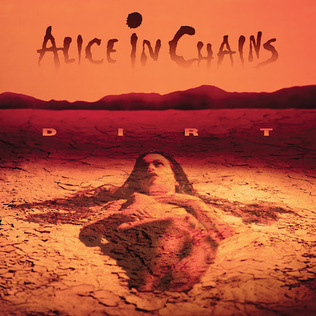
Later in 1992, Alice In Chains released 'Dirt', the album that became their defining work. Produced again by Dave Jerden, 'Dirt' was recorded during a period when the band's career was accelerating and Staley's drug problems were becoming more visible in the music and in the public story surrounding him. The album did not treat addiction as romance or rebellion. It sounded trapped, exhausted, and brutally aware of consequence. Songs such as 'Sickman', 'Junkhead', 'Dirt', and 'God Smack' confronted dependency and self-disgust with a directness that could be uncomfortable, while 'Would?' was written in memory of Andrew Wood of Mother Love Bone, whose death had deeply affected the Seattle music community.
'Dirt' also contained one of Cantrell's most personal songs, 'Rooster'. Written about his father, who served in the Vietnam War and carried the nickname 'Rooster', the song widened the album's emotional scope beyond Staley's struggles. It moved with a slow, almost processional force, using quiet verses and explosive choruses to evoke trauma, survival, and family memory without reducing them to slogans. The album's sequencing made it feel less like a collection of singles than a descent through different forms of damage. Its sound was thick and deliberate: Cantrell's riffs were tuned low and layered, Starr's bass gave the songs a grim physical weight, and Kinney's drumming avoided flash in favor of tension and impact.
The success of 'Dirt' placed Alice In Chains near the center of the alternative-rock explosion, but it also intensified the contradictions around them. They toured heavily, appeared on major festival bills, and became one of the most commercially successful bands of their scene. At the same time, Staley's health and reliability became recurring concerns. The band's music was never separate from that reality, but it would be too simple to reduce Alice In Chains only to tragedy. Cantrell was also emerging as a major songwriter, capable of turning private history and heavy-metal architecture into songs with broad emotional reach. Kinney brought a dry, controlled power to the rhythm section, and Starr's playing gave the early albums much of their low-end punch.
After touring behind 'Dirt', the band entered another transition. Mike Starr left the group in 1993 and was replaced by Mike Inez, formerly associated with Ozzy Osbourne's band. Inez's arrival helped shape the next phase of Alice In Chains, and his melodic bass style fit naturally into their darker acoustic work. In early 1994, the band released 'Jar of Flies', an EP that became one of the most remarkable releases of the era. It was largely written and recorded quickly after the band returned from touring, and rather than trying to out-heavy 'Dirt', Alice In Chains moved inward.
'Jar of Flies' was mostly acoustic, but it was not soft in the usual sense. Its arrangements used mandolin, layered guitars, restrained percussion, and space. 'No Excuses' had a brighter surface than much of the band's catalog, with Kinney's shuffle-like groove and one of their most accessible choruses, yet it still carried emotional tension. 'I Stay Away' added strings and a strange, swaying arrangement that made the song feel both fragile and grand. 'Nutshell' became one of Staley's most haunting performances, built from spare chords and a vocal that seemed to hold back as much as it revealed. The EP debuted at number one on the Billboard 200, a striking achievement for a seven-song acoustic release by a band best known for heavy music.
In 1995, Alice In Chains released their self-titled third full-length album, often called 'Tripod' because of the three-legged dog on its cover. By then, the band's public appearances were fewer, and the album carried a dense, sickly atmosphere different from the sharper attack of 'Dirt'. The guitars were sludgier, the tempos often dragged with intention, and the production had a murky weight that matched songs such as 'Grind', 'Heaven Beside You', 'Again', and 'Frogs'. Cantrell took more lead vocals than before, not as a replacement for Staley but as part of the band's evolving balance. The album sounded like a group still capable of great work, but also like one under pressure from forces it could not fully control.
One of the band's most revealing later moments with Staley came in 1996, when Alice In Chains recorded an episode of 'MTV Unplugged'. It was their first concert since early 1994, and the performance had an almost suspended quality. Staley appeared physically diminished, but his voice remained emotionally precise, and the band played with remarkable restraint. The set drew from 'Dirt', 'Jar of Flies', 'Sap', and 'Alice In Chains', proving again that the songs could survive without their usual volume. The performance of 'Down in a Hole' showed the power of the Staley-Cantrell vocal blend in its most exposed form, while 'Nutshell' became an especially important document of the band's quiet intensity. The concert has endured because it does not feel like a polished victory lap. It feels human, tense, and painfully focused.
After the mid-1990s, Alice In Chains became increasingly inactive. Cantrell released solo work, including 'Boggy Depot' in 1998 and 'Degradation Trip' in 2002, records that carried much of the Alice In Chains atmosphere while showing more of his own voice as a frontman. Staley largely withdrew from public life. In 2002, he died in Seattle at age 34 from a drug overdose. His death confirmed what many fans had feared, and it reshaped the meaning of the band's earlier work. Songs that had already sounded wounded now carried the additional weight of finality. The loss was not only the death of a famous singer; it was the silencing of one of rock's most distinctive voices, a vocalist who could make pain sound both massive and intimate.
For several years, the idea of Alice In Chains continuing seemed almost impossible. The band's identity had been so closely tied to Staley's voice that any return risked looking like an attempt to replace someone irreplaceable. Yet the surviving members gradually found a way forward. A 2005 benefit performance helped bring them back together, and vocalist-guitarist William DuVall eventually joined the band. DuVall had his own history in punk, hard rock, and alternative music, including work with Comes with the Fall, and he did not simply imitate Staley. His role was delicate: he had to honor the old songs while helping the band create a future.
The result was 'Black Gives Way to Blue', released in 2009. Produced by Nick Raskulinecz, the album was both a comeback and a memorial. It restored the band's heavy, harmonized sound while allowing grief to become part of the music rather than something hidden behind it. Cantrell took a central vocal and songwriting role, with DuVall adding power and texture to the harmonies. The closing title track featured Elton John on piano, a meaningful detail because Cantrell had admired John since childhood. The song was written as a farewell to Staley, and its quietness gave the album a sense of ritual closure. Instead of pretending nothing had happened, Alice In Chains made loss the emotional center of their return.
'Black Gives Way to Blue' succeeded because it did not try to recreate 1992. Songs such as 'Check My Brain', 'Your Decision', and 'A Looking in View' carried the familiar Alice In Chains DNA: descending guitar figures, uneasy harmonies, and lyrics concerned with consequence, memory, and survival. But the album also sounded like adults reckoning with the past. It showed that Cantrell, Kinney, Inez, and DuVall could continue the band's language without turning it into nostalgia. For many listeners, it was one of the rare rock reunions that felt artistically necessary rather than merely commercial.
The band continued with 'The Devil Put Dinosaurs Here' in 2013, another album produced by Raskulinecz. It expanded the later Alice In Chains sound with long, grinding tracks, dry humor, and a wary view of institutions, belief, and human behavior. The title itself suggested the band's taste for dark absurdity. The record was not as shocking as 'Dirt' or as emotionally exposed as 'Jar of Flies', but it confirmed the stability of the second era. Cantrell's guitar tone remained central: thick, patient, and instantly identifiable, with riffs that often seemed to crawl rather than charge.
In 2018, Alice In Chains released 'Rainier Fog', recorded partly in Seattle, which gave the album a symbolic connection to the city that shaped them. It was their first studio album in several years and continued the DuVall-era balance between heaviness, melody, and reflection. Songs such as 'The One You Know' and 'Never Fade' carried the band's familiar shadowed harmonies while acknowledging endurance, memory, and the strange experience of surviving one's own history. By this point, Alice In Chains had become a band with two major chapters: the Staley years, marked by groundbreaking darkness and vocal chemistry, and the DuVall years, marked by persistence, respect, and renewal.
Alice In Chains' influence can be heard across metal, post-grunge, alternative rock, and heavy music more broadly. Their sound helped make minor-key vocal harmony a central tool of modern heavy rock. Many bands borrowed the low tunings and the downcast mood, but fewer matched the songwriting discipline behind them. At their best, Alice In Chains were not merely heavy; they were architectural. Cantrell's riffs left room for melody, Kinney's drums created pressure without overcrowding the songs, and the voices often carried the deepest emotional information. Staley's gift was not just that he could sing high or loud. It was that he could make a melody feel exposed even when surrounded by massive guitars.
Their place in music history is sometimes flattened by the word 'grunge', but Alice In Chains deserve a more specific description. They were a Seattle band with metal bones, acoustic instincts, and an almost gothic understanding of harmony. They wrote about addiction, war, guilt, isolation, friendship, and grief without turning those subjects into decoration. Their music could be bleak, but its endurance comes from craft as much as confession. 'Facelift' announced the sound, 'Dirt' defined its darkest power, 'Jar of Flies' proved how much weight they could carry quietly, and 'Black Gives Way to Blue' showed that the band could survive loss without denying it.
Today, Alice In Chains are viewed as one of the essential bands of their era, not only because they sold millions of records or belonged to a famous scene, but because they created a language that remains unmistakable. A few seconds of Cantrell's guitar, a close harmony, or a slow descending chord change is usually enough to identify them. Their story contains success, damage, absence, and return, but the lasting reason they matter is musical: they found beauty inside heaviness and made darkness sound carefully built, deeply sung, and impossible to mistake for anyone else.