
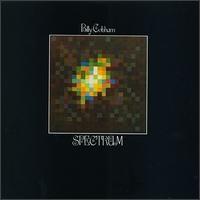
Billy Cobham
Biography
Billy Cobham's story begins far from the electric volume and odd-meter storms that later made his name. William Emanuel Cobham Jr. was born on May 16, 1944, in Colon, Panama, and moved with his family to New York when he was still a small child. Music was not an abstract dream in the Cobham household. His father played piano, and Cobham was already performing with him as a boy, learning early that rhythm was not just a matter of power but of listening, placement, and responsibility. New York gave him another kind of education: marching bands, school music, jazz clubs, Latin rhythms in the neighborhood, and the discipline of formal training. By the time he passed through the High School of Music and Art and later served as a percussionist in the U.S. Army band system, Cobham had built the foundation that would define him: a drummer with the force of a rock player, the precision of a trained percussionist, and the restless curiosity of a jazz musician.
That combination mattered because Cobham came of age at a moment when the walls between musical worlds were beginning to crack. In the mid and late 1960s, jazz musicians were hearing soul, funk, rock, and electric blues not as distractions but as new materials. Cobham entered the professional scene with a rare kind of authority. He worked with pianist Horace Silver, a bandleader who prized clarity, swing, and hard-driving arrangements, and he became part of the New York studio and touring network. He also played in Dreams, an ambitious brass-heavy jazz-rock group that included the Brecker brothers and guitarist John Abercrombie. Dreams did not become a household name, but it placed Cobham near musicians who were trying to build a modern language out of jazz harmony, horn-section punch, rock volume, and funk movement. For Cobham, it was a practical laboratory. He was learning how to make complex music hit the body immediately.
His next major step placed him close to one of the most important transitions in 20th-century jazz. Cobham recorded with Miles Davis during the electric period, including sessions connected to 'A Tribute to Jack Johnson' and other early 1970s Davis projects. Davis did not run bands by over-explaining the music. He created situations, used musicians with strong instincts, and expected them to react. Cobham absorbed that lesson deeply. The Davis environment demanded drummers who could hold a groove without making it small, respond to sudden changes without sounding nervous, and treat the studio as a place where form could be discovered in real time. On the 'Jack Johnson' sessions, the music's long electric vamps and aggressive forward motion helped define jazz-rock without making it polite. Cobham was not the only drummer in Davis's orbit, but his presence in that world helped connect him to the new idea that a jazz drummer could have the physical impact of a rock drummer without giving up sophistication.
The real explosion came with the Mahavishnu Orchestra. Formed in 1971 by guitarist John McLaughlin, with Cobham on drums, Jan Hammer on keyboards, Jerry Goodman on violin, and Rick Laird on bass, the group was not simply a fusion band in the relaxed sense of the word. It sounded like pressure, speed, spiritual ambition, and technical danger compressed into one unit. McLaughlin brought Indian rhythmic ideas, devotional intensity, and a guitarist's hunger for distortion and velocity. Hammer brought electric keyboard lines that could slash like guitar or float like orchestration. Goodman made the violin a cutting lead instrument. Cobham gave the band its engine. His drumming could be thunderous, but the shock was not only volume. It was the way he could place explosive fills inside irregular meters and still make the music feel like it was moving forward rather than showing off.
'The Inner Mounting Flame', released in 1971, became the first full statement of that sound. The album's tracks were built from sharp unison themes, sudden stops, long improvisations, and rhythmic designs that challenged rock and jazz audiences at the same time. Cobham's playing on pieces such as 'Meeting of the Spirits' and 'The Noonward Race' made a new kind of drummer visible: not a timekeeper behind virtuosos, but a co-architect of the drama. His double bass drum work, snare accents, cymbal punctuation, and tom runs added architecture to the compositions. In less disciplined hands, the music could have become clutter. Cobham's gift was that even at high speed, he often sounded organized. He made intensity legible.
The follow-up, 'Birds of Fire', released in 1973, sharpened the Mahavishnu Orchestra's identity even further. By then the band had toured heavily, and the chemistry had become both astonishing and unstable. The music was tighter, brighter, and even more compressed with information. Cobham's role on the title track and on 'One Word' showed how deeply he understood dynamics. He could drive a passage with military precision, then break it open with a fill that sounded almost orchestral. The group also released the live album 'Between Nothingness & Eternity', documenting the scale of its stage power. Yet the same energy that made the band remarkable also made it difficult to sustain. Creative and financial tensions built inside the original lineup, and the first version of the Mahavishnu Orchestra ended after only a short period. Its lifespan was brief, but its influence was enormous, especially on progressive rock, jazz fusion, metal drummers, and musicians who wanted technical music to feel dangerous rather than academic.
Cobham could have remained known mainly as the drummer from Mahavishnu, but in 1973 he made the album that turned his own name into a landmark: 'Spectrum'. Recorded for Atlantic as the original Mahavishnu lineup was nearing its end, it featured Jan Hammer on keyboards, Tommy Bolin on guitar, Lee Sklar on bass for several tracks, and Ron Carter on others. The album did something very rare. It kept the density and virtuosity of fusion but made the grooves direct, muscular, and memorable. 'Quadrant 4' opened with a rush of speed and precision, while 'Stratus' stretched into a darker, funkier space built around a hypnotic bass figure and Cobham's enormous drum sound. Bolin, not yet the mainstream rock name he would become through Deep Purple, played with a raw, blues-rock edge that kept the record from sounding like a closed jazz exercise. Hammer added synthesizer and electric piano colors that connected Mahavishnu's futurism to something more street-level and groove-centered.
'Spectrum' was also important because it made the drummer-bandleader feel natural. Many drum-led albums can become demonstrations. Cobham avoided that by writing pieces with strong identities and by giving the other musicians room to become characters in the music. His drumming was still the central force, but it did not suffocate the record. The album reached the top of the Billboard jazz chart and crossed into wider rock and R&B awareness, which was unusual for such rhythmically advanced music. Later generations found it in different ways. 'Stratus' became a touchstone for musicians and producers, and its groove was famously sampled by Massive Attack on 'Safe from Harm'. The record's reach extended well beyond the jazz audience that first received it.
After 'Spectrum', Cobham did not simply repeat the formula. 'Crosswinds', released in 1974, showed a broader and more arranged side of his writing. With musicians including George Duke and John Abercrombie, the album moved through funk, orchestral jazz-rock textures, and more spacious ensemble writing. The title suite suggested Cobham was interested not only in impact but in shape: sections unfolding, moods changing, horns and keyboards forming environments around the drums. He was also deeply interested in equipment and mechanics, not in a gimmicky way but as part of sound design. During this period he became associated with large kit configurations and a highly physical, ambidextrous approach to the drums, always looking for a setup that could translate his ideas clearly. His large kit was not decoration. It allowed him to think across the drums melodically, almost like a percussion ensemble controlled by one player.
The mid-1970s were Cobham's most visible period as a solo artist. Albums such as 'Total Eclipse', 'Shabazz', 'A Funky Thide of Sings', and 'Life & Times' extended his identity as a bandleader who moved between jazz-rock, funk, Latin rhythm, and high-energy improvisation. 'Shabazz', recorded live, captured the heat of his bands onstage, where the music could be more volatile and physically overwhelming than in the studio. 'A Funky Thide of Sings' leaned into groove with a title that reflected Cobham's playful side, while 'Life & Times' showed how fusion was beginning to absorb smoother studio textures without losing instrumental ambition. These records did not all carry the same historical weight as 'Spectrum', but they reveal Cobham's real career pattern: he was not interested in guarding one perfect moment. He kept searching, sometimes successfully, sometimes unevenly, but always as a working musician rather than a museum piece.
Part of Cobham's distinctiveness lies in the way he balanced discipline and force. His drumming could seem almost superhuman, especially to listeners first encountering the speed of his hands or the clarity of his double bass patterns. Yet what separates him from mere athletic drummers is his sense of structure. He often plays fills that have beginnings, middles, and endings, not just bursts. His cymbal work can push the band without washing out the details. His snare sound is crisp and commanding, but he uses ghost notes, accents, and placement to create conversation inside the groove. He was also one of the drummers who helped make large kits, double bass drum language, and ambidextrous coordination central to the modern fusion imagination. For rock drummers, he proved that advanced harmony and odd meters could still hit hard. For jazz drummers, he proved that amplification and backbeat power did not have to mean simplification.
Cobham's career also included a wide range of collaborations that show how flexible his musicianship was. He worked with George Benson, Stanley Turrentine, Milt Jackson, Ron Carter, Freddie Hubbard, Grover Washington Jr., and many others in jazz and soul-jazz settings. He also moved through rock, funk, and pop-adjacent contexts, playing with artists far outside a narrow fusion lane. This breadth matters because Cobham's reputation can sometimes be reduced to high-speed fireworks. In reality, he came from a professional tradition in which a drummer had to serve singers, soloists, arrangers, and rooms. Even at his most explosive, his playing usually carries that older idea of function. The drummer is there to make the music speak.
The 1980s and 1990s brought changes in the musical climate. Fusion as a commercial force lost some of the cultural heat it had carried in the early 1970s, and the recording industry became less hospitable to long instrumental statements. Cobham continued to record, tour, and teach, adapting to new settings without abandoning his identity. He worked in Europe frequently and eventually based much of his life outside the United States. Albums from these decades vary in style, but they show a musician who refused to be trapped by nostalgia. He explored electronics, different ensemble sizes, and global rhythmic ideas, while continuing to revisit the music that first made him famous when there was a meaningful reason to do so.
Education became an increasingly important part of his work. Cobham has long been respected not only for what he can play but for how clearly he can explain musical responsibility. His clinics and instructional projects emphasize listening, dynamics, time, and the drummer's relationship to the ensemble, not only speed. That is one reason his influence crosses generations. Drummers who admire him include players from jazz, progressive rock, funk, metal, and alternative music. His impact can be heard in the broader ambition of progressive drummers such as Bill Bruford, in the power and precision valued by later metal and fusion players, and in the groove-oriented language that shaped drummers such as Dennis Chambers. Cobham did not invent every tool those musicians use, but he made a complete model of how those tools could be combined.
His legacy is tied most strongly to three creative zones. With Miles Davis, he was part of the electric turn that challenged jazz's old boundaries. With the Mahavishnu Orchestra, he helped create one of the most intense ensemble languages of the early 1970s, where virtuosity, volume, and complex rhythm became almost ritualistic. As a solo artist on 'Spectrum' and the albums that followed, he showed that a drummer could lead fusion from the center without making the music feel like a clinic. Few drummers have been so closely connected to so many important transitions at once.
Cobham's personality, as it comes through in interviews and performances, is not that of a chaos-seeker, even though his music can sound volcanic. He often speaks like a craftsman: curious, analytical, alert to the practical details of sound, travel, equipment, and ensemble behavior. There is confidence in his playing, but also a working musician's awareness that music is made with other people in real time. That may be why his best recordings still feel alive rather than merely impressive. The listener hears strength, but also decisions. He is not just filling space; he is shaping it.
Billy Cobham remains one of the defining drummers of jazz fusion, but that label only partly explains him. He is a Panamanian-born, New York-raised musician whose career connects marching discipline, jazz apprenticeship, electric experimentation, rock energy, funk groove, and global rhythm. His greatest recordings changed what drummers imagined they were allowed to do, but they also changed what bands could ask from a drummer. In Cobham's hands, the drum kit became a lead voice, an arranger's tool, a source of physical excitement, and a disciplined musical intelligence. That is why his work still matters: not because it is fast, loud, or technically difficult, but because it made power sound thoughtful.