
Dr. Dre
Biography
Dr. Dre's career is one of the central stories in modern hip-hop: a story of sound, control, reinvention, and contradiction. Born Andre Romelle Young in Compton, California, in 1965, he became famous first as a DJ and producer, then as the sonic architect behind N.W.A, Death Row Records, Aftermath Entertainment, Eminem, 50 Cent, and the polished West Coast sound that reshaped rap in the 1990s. Dre was never the most technically dazzling rapper in his circle, and he rarely presented himself as a poet in the traditional sense. His genius was architectural. He understood how drums, bass, space, voice, and attitude could be arranged to make a record feel larger than the person performing it.
Dre grew up in and around Compton and the Los Angeles area during a period of major social pressure, economic change, and rising street violence. Music became his escape and his discipline. Before he became Dr. Dre, he was part of the Los Angeles electro and dance scene, DJing at clubs and working with the World Class Wreckin' Cru. In that early phase, he wore sequined costumes and produced sleek, synthetic party records that were closer to electro-funk than the hard street rap he would later help define. That contrast is important. Dre did not arrive fully formed as the cold, blunt producer of gangsta rap. He learned in clubs, on turntables, around drum machines, and through the practical craft of making people move.
The World Class Wreckin' Cru gave Dre technical experience but not the identity that would make him historic. That came when he connected with Eazy-E, Ice Cube, DJ Yella, MC Ren, Arabian Prince, and the orbit of Ruthless Records. N.W.A took shape in the second half of the 1980s, combining local street narratives, aggressive humor, police confrontation, and hard funk-driven production into something that felt shocking even by rap's already confrontational standards. Dre's production on the group's early material was not yet as spacious as his later G-funk work, but it already showed his instincts: heavy drums, sharp sampling choices, and a gift for making records feel cinematic without losing their street-level force.
N.W.A's breakthrough came with 'Straight Outta Compton' in 1988. The album did not become powerful because radio embraced it. It became powerful because it sounded like something radio could not contain. Dre's production gave the record its physical impact, while Ice Cube's writing, Eazy-E's nasal menace, Ren's authority, and the group's collective presence made it feel like a dispatch from a world rarely represented in mainstream American music with that level of anger. 'Fuck tha Police' became the flashpoint, drawing national attention and a warning letter from the FBI to the group's label. For critics, officials, and parents, N.W.A were a threat. For many listeners, they were saying things that had already been lived but not broadcast at full volume.
Dre's role in N.W.A was not only musical. He helped turn raw material into records with enormous weight. 'Straight Outta Compton' had the energy of a group kicking open a door, but the production was more controlled than its reputation sometimes suggests. The drums hit hard, the samples were chosen for maximum tension, and the pacing gave each voice a place. Dre understood that chaos on record is usually most effective when someone is secretly organizing it. That would remain one of his signatures: music that feels dangerous but is carefully engineered.
After Ice Cube left N.W.A over financial disputes, the group continued with 'Efil4zaggin' in 1991. The album was commercially successful and darker in tone, but the internal world around Ruthless Records was becoming unstable. Dre's relationship with Eazy-E and Ruthless co-founder Jerry Heller deteriorated. The disputes were financial, personal, and creative, and by the early 1990s Dre had left Ruthless. His exit became one of the most important turning points in hip-hop business history, because it led to the formation of Death Row Records with Suge Knight and other partners.
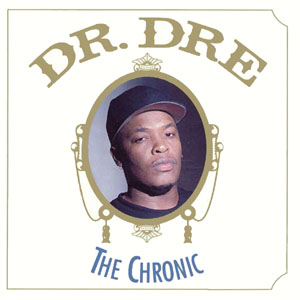
Death Row gave Dre a new platform and a new sound. In 1992, he released 'The Chronic', an album that changed the center of gravity in rap. If N.W.A had made Los Angeles sound explosive, 'The Chronic' made it sound luxurious, threatening, and almost hypnotic. Dre slowed the tempos, deepened the bass, sharpened the snares, and built tracks around Parliament-Funkadelic influence, synthesizer lines, and thick grooves. This became known as G-funk, but Dre's version was not simply funk samples over rap drums. It was a whole atmosphere: sunlit and violent, smooth and paranoid, relaxed on the surface but tense underneath.
'The Chronic' also introduced Snoop Doggy Dogg to a national audience. Snoop's voice was the perfect contrast to Dre's production: loose, melodic, conversational, and dangerous without seeming to strain. Songs such as 'Nuthin' but a G Thang', 'Let Me Ride', and 'Dre Day' turned the album into a commercial and cultural phenomenon. Dre's rapping was direct and controlled, but he was most powerful as a curator of voices. He knew how to frame Snoop, how to use Nate Dogg's hooks, how to make The Lady of Rage sound fierce, and how to turn a label roster into a recognizable universe. 'The Chronic' did not just launch a solo career. It launched a dynasty.
One of Dre's greatest production gifts was his use of space. Earlier rap records often felt densely packed with samples and scratches. Dre's early 1990s records breathed differently. A bass line might dominate the track, a keyboard part might curl around the vocal, and the drums would hit with a dry authority that left room for the rapper's personality. That clean, heavy, spacious sound became one of the most imitated styles in hip-hop. It also proved that rap production could be as identifiable as a singer's voice. Within a few seconds of a Dre beat, listeners often knew who had built the room they were standing in.
In 1993, Dre produced much of Snoop Doggy Dogg's debut album 'Doggystyle', another defining Death Row release. The album extended the G-funk sound while allowing Snoop to become a star in his own right. It was smoother and more playful than 'The Chronic', but it still carried the edge of Death Row's world. Dre's production helped create the illusion of ease. The records sounded relaxed, but the grooves were meticulous. Kick drums, claps, bass lines, and keyboard figures landed with almost surgical placement. That combination of polish and street tension made Death Row the dominant rap label of the early 1990s.
The Death Row era was also shadowed by volatility. The label became associated not only with success but with intimidation, conflict, and violence. Dre's public image during this period was powerful and controlled, yet his personal history included serious incidents that cannot be separated from his legacy. In 1991, journalist Dee Barnes was assaulted by Dre, an episode he later publicly apologized for. Singer Michel'le, who had a relationship with Dre and is the mother of one of his children, has also accused him of abuse. Dre has acknowledged past harm and expressed regret, but those accounts remain a major and necessary part of any honest biography. They complicate the story of a musical innovator with a record of damaging behavior toward women.
By the mid-1990s, Dre was increasingly uncomfortable with Death Row's environment. He left the label in 1996 and founded Aftermath Entertainment, a move that looked risky at first. Death Row still had huge cultural power, and Dre's first major post-Death Row project, the compilation 'Dr. Dre Presents the Aftermath', received mixed reactions. For the first time since N.W.A, Dre seemed uncertain in public. The industry wondered whether his best era had ended. He had walked away from the label that defined West Coast rap's commercial peak, and his new company did not immediately appear ready to replace it.
The turning point came through Eminem. Dre heard the Detroit rapper's music after Eminem had already built an underground reputation, and the connection became one of the most consequential producer-artist pairings in rap history. Eminem brought technical skill, rage, humor, insecurity, and narrative chaos. Dre gave him sonic authority and a platform. The result was 'The Slim Shady LP' in 1999, executive produced by Dre and released through Aftermath and Interscope. Dre's beats on songs such as 'My Name Is' gave Eminem a strange, comic, sinister frame, while the album's success rescued Aftermath from uncertainty.
That same year, Dre released '2001', sometimes informally referred to as 'The Chronic 2001'. It was not simply a sequel to 'The Chronic'. It was a colder, more expensive, more cinematic album, built for an era when rap had become a dominant commercial force. The production was enormous: clean drums, orchestral touches, deep bass, eerie keyboards, and mixes so precise they became reference points for engineers and producers. Songs such as 'Still D.R.E.', 'Forgot About Dre', 'The Next Episode', and 'Xxplosive' restored Dre's position at the top of rap production. The album also proved that he could update his sound without abandoning his identity.
'2001' is one of the clearest examples of Dre's perfectionism. He was known for demanding repeated vocal takes, refining small rhythmic details, and treating the studio as a laboratory. Artists who worked with him often described a process in which delivery mattered as much as writing. A word might need to sit slightly behind the beat, a breath might need to be removed, a hook might be rebuilt until it felt effortless. That level of control could be exhausting, but it helped produce records with unusual durability. Dre's best work rarely feels accidental. Even when the subject matter is chaotic, the sound is disciplined.
After '2001', Dre became less visible as a solo artist and more powerful as an executive producer. His work with Eminem continued into 'The Marshall Mathers LP' and later projects, while Aftermath became a gateway for major rap careers. In the early 2000s, Dre played a central role in launching 50 Cent's mainstream career through 'Get Rich or Die Tryin'', alongside Eminem. 50 Cent arrived with street credibility, hooks, humor, and menace, and Dre's production helped make his debut feel massive without overcomplicating it. Once again, Dre was not simply making beats. He was building an artist's sound-world.
The long-delayed album 'Detox' became its own myth. For years, Dre hinted at a final solo album that would push his production further, and collaborators spoke about sessions, experiments, and unfinished tracks. But the album never arrived in the form fans expected. The delay became a symbol of both Dre's perfectionism and his reluctance to release anything that did not meet his internal standard. In a genre that often rewards constant output, Dre became the opposite: a figure whose scarcity made every appearance feel heavier, but whose silence also frustrated listeners.
Dre's business life eventually became as famous as his music. In 2006, he and Jimmy Iovine co-founded Beats Electronics, building Beats by Dre headphones into a major consumer brand after the headphones reached the market. The product was not only about audio equipment; it was about cultural placement. Beats connected hip-hop aesthetics, athlete culture, celebrity marketing, and portable music listening at exactly the right moment. In 2014, Apple acquired Beats for a reported 3 billion dollars, making it one of the biggest music-related business deals of its era. The sale transformed Dre's public image from producer-mogul to one of the most successful entrepreneurs in music history.
In 2015, Dre released 'Compton', inspired by the film 'Straight Outta Compton', the N.W.A biopic that brought the group's story to a new generation. The album was not 'Detox', and Dre made clear that 'Detox' had been abandoned because he was not satisfied with it. 'Compton' was dense, modern, and more reflective than his earlier solo work. It did not try to recreate the carefree menace of G-funk. Instead, it looked back at Compton, fame, memory, and survival through the perspective of an older artist who had seen his history turned into cinema. The album featured Kendrick Lamar, Anderson .Paak, King Mez, Justus, Snoop Dogg, Eminem, and others, showing Dre once again as a curator of voices across generations.
The N.W.A biopic 'Straight Outta Compton' was a major commercial success and helped cement the group's place in popular memory. It also renewed debate over what the film chose to include and exclude, especially regarding Dre's history with women. That tension reflects a larger difficulty in Dre's legacy. He helped create some of the most important records in hip-hop, opened doors for artists who changed the genre, and reshaped production standards. He also caused real harm, and the public acknowledgment of that harm came only after years of criticism. A serious account of Dre cannot flatten either side.
In 2021, Dre suffered a brain aneurysm and was hospitalized in Los Angeles. He later spoke publicly about the severity of that period, including additional health complications during his hospitalization. The episode gave his later appearances a different weight. In 2022, he performed at the Super Bowl LVI halftime show in Inglewood with Snoop Dogg, Eminem, Mary J. Blige, Kendrick Lamar, and 50 Cent. The performance was a public celebration of West Coast hip-hop's reach, but it was also a reminder of how much of mainstream rap history ran through Dre's studio decisions. From N.W.A to Snoop, Eminem, 50 Cent, and later Los Angeles artists connected to his extended orbit, his fingerprints were everywhere.
Dre's musical personality is built on control. He is not prolific in the usual sense, and he is not a spontaneous public figure. He is a studio obsessive, a producer who treats sound as architecture and performance as something to be shaped until it hits with maximum force. His best records often turn other people into sharper versions of themselves. Snoop became smoother over Dre's grooves. Eminem became more vivid against Dre's clean, sinister bounce. 50 Cent became colder and more commanding inside Dre's minimal, heavy frames. Even when Dre is the named artist, the record often feels like a carefully directed film with a cast.
His influence on hip-hop production is enormous. Before Dre, producers were already stars in rap, but he helped make the producer's sonic signature feel like a brand. The G-funk era changed the sound of West Coast rap, but his later work also changed expectations around mixing, low-end power, and vocal clarity in mainstream hip-hop. His records sounded expensive not because they were cluttered, but because every element had authority. The kick drum, the snare, the bass, the synth line, the vocal stack, the silence between sounds - all of it mattered.
Dre's story also shows how hip-hop evolved from local scenes and independent labels into global entertainment infrastructure. He began as a club DJ in Los Angeles, became a member of one of the most controversial groups in American music, helped build Death Row into a rap empire, survived a failed reset, rebuilt himself through Aftermath, launched some of the biggest artists of two generations, and turned a headphone company into a multibillion-dollar acquisition. Few figures have moved through so many phases of the music business while remaining associated with such a specific sound.
The contradictions are part of the biography, not a footnote. Dr. Dre is a visionary producer whose records changed the way rap sounded. He is also a man whose legacy includes public accountability for violence and abuse. He helped document the anger and pressure of Compton while also turning that world into a commercial mythology. He made records that sounded effortless through methods that were anything but relaxed. He released relatively few solo albums, yet his influence is spread across hundreds of tracks, careers, and production choices.
Today, Dr. Dre is viewed as one of hip-hop's defining producers and executives. 'Straight Outta Compton' made him part of rap's political and cultural explosion. 'The Chronic' gave the West Coast a new sonic empire. '2001' proved that his sound could evolve into a widescreen studio masterpiece. Aftermath extended his reach through Eminem, 50 Cent, Kendrick Lamar's label orbit, Anderson .Paak collaborations, and other artists connected to his world. His legacy is not simple, and it should not be made simple. Dre matters because he changed the sound of popular music, built institutions around that sound, and left behind records so precisely constructed that they still feel heavy, clean, and unmistakably his.