
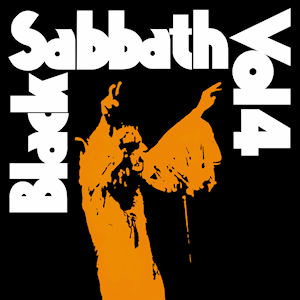

The Story
Released on September 25, 1972, Vol. 4 marked a shift in Black Sabbath's approach, combining their heavy riff-driven sound with experimentation and varied arrangements. After extensive touring following Master of Reality, the band relocated to Los Angeles to record, working in a different environment that influenced both the sound and structure of the album. The sessions reflected a broader musical direction, incorporating piano, acoustic passages, and layered production alongside the band’s established heavy style.
Wheels of Confusion / The Straightener opens the album with multiple sections, moving from melodic guitar lines into heavier riffs and extended instrumental passages. Tomorrow's Dream follows with a concise structure, while Changes introduces a dramatic contrast with a piano-based arrangement and restrained vocal delivery. FX functions as a brief instrumental transition leading into Supernaut, which returns to a driving rhythm and layered guitar textures.
Snowblind stands as one of the album’s central tracks, combining heavy riffing with dynamic shifts. Cornucopia continues the darker tone with slower pacing, while Laguna Sunrise provides an acoustic instrumental that contrasts with the heavier material. St. Vitus Dance returns to a shorter rock structure, and the closing track, Under the Sun / Every Day Comes and Goes, expands into multiple sections, blending heavy riffs with melodic passages.
Vol. 4 balances experimentation with the band’s core sound. The album moves between heavy compositions, acoustic interludes, and piano-driven material, reflecting a willingness to expand beyond earlier formulas. By combining dense guitar tone with varied instrumentation and multi-part arrangements, the record captures Black Sabbath exploring new directions while maintaining their heavy foundation.