
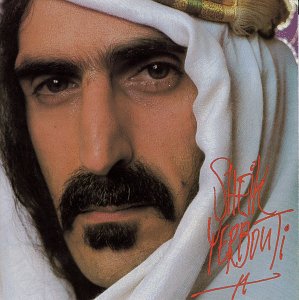
Sheik Yerbouti
By Frank Zappa
The Story
Released in March 1979, Sheik Yerbouti became one of Frank Zappa’s most commercially successful albums and a defining document of his late-1970s style. The double album was largely built from live recordings made during 1977 and 1978 tours, later heavily edited and overdubbed in the studio. This approach allowed Zappa to combine the energy of live performance with detailed post-production, shaping the material into tightly constructed songs while preserving improvisational elements.
The album opens with I Have Been in You, a satirical take on contemporary rock vocal styles, immediately establishing the record’s emphasis on parody. Flakes follows with a groove-driven arrangement and spoken-style vocals, while Broken Hearts Are for Assholes and I'm So Cute continue the album’s mix of humor and sharply structured backing. These tracks reflect Zappa’s interest in combining satire with precise ensemble playing.
Instrumental pieces such as Rat Tomago and Rubber Shirt highlight the musicianship of the band. Rat Tomago features extended guitar work drawn from live improvisation, while Rubber Shirt is constructed from separate bass and drum performances edited together, creating a complex rhythmic interaction. These tracks demonstrate Zappa’s studio-based compositional approach even when working from live material.
Several songs on the album became widely recognized for their satirical lyrics. Bobby Brown Goes Down presents a narrative character study delivered over a steady arrangement, while Dancin' Fool targets late-1970s dance trends with a humorous vocal performance and accessible structure. Jewish Princess and Baby Snakes continue the album’s focus on social parody, combining direct lyrics with tight instrumental backing.
The second half of the album moves between shorter songs and extended performances. City of Tiny Lites and Wild Love incorporate shifting sections and ensemble interplay, while Yo' Mama closes the album with a long-form piece that blends composed passages with extended guitar improvisation. This final track reflects the balance between structure and spontaneity that runs throughout the record.
Sheik Yerbouti combines satire, instrumental virtuosity, and studio editing into a cohesive double album. By drawing on live recordings and reshaping them through overdubs and arrangement, Zappa created a polished yet energetic sound. The album’s mixture of accessible songs and complex musicianship helped broaden his audience while maintaining the technical and compositional elements central to his work.