
Frank Zappa
Biography
Frank Zappa was born on December 21, 1940, in Baltimore, Maryland, and grew up in a household shaped by science, discipline, suspicion of authority, and frequent movement. His father, Francis Zappa, worked as a chemist and mathematician in defense-related settings, and the family moved through several towns before settling in California. Zappa later described childhood memories of military facilities, gas masks, illness, and chemical warnings as part of the strange atmosphere around him. He was not raised as a conventional child prodigy, but once music caught him, he became obsessive. As a teenager in Lancaster, California, he listened to rhythm and blues records with the same seriousness that he gave to modern classical composers. The crucial discovery was Edgard Varese, whose percussion, dissonance, and refusal to behave like respectable concert music opened a door for him. Zappa did not hear a hard border between doo-wop, blues, satire, orchestral composition, noise, and rock and roll. That refusal to separate high and low culture became one of the central facts of his life.
Before he became famous, Zappa was already thinking more like a composer and editor than like a standard rock musician. He played drums at first, then guitar, wrote film music, worked in small studios, and absorbed the possibilities of tape as a creative tool. In 1963, he took over Studio Z in Cucamonga, California, a small recording facility where he experimented with overdubbing, sound collage, and unusual commercial jobs. One of the most notorious early episodes came when he was arrested after an undercover vice-squad operation connected to an allegedly obscene audio tape. Zappa spent a short time in jail, and the event deepened his distrust of police power, censorship, and social hypocrisy. It also taught him that American respectability could be absurd, theatrical, and dangerous. That lesson would run through his work for the rest of his career.
Zappa entered the Los Angeles rock scene through a band called the Soul Giants, who soon became the Mothers. The name already suggested a joke with teeth, but record executives were nervous, so the group became the Mothers of Invention. The early Mothers were not polished pop stars. They looked odd, sounded odder, and stood apart from both mainstream show business and the flower-power optimism that was beginning to define the Sunset Strip. Zappa was often grouped with the counterculture, but he was never a simple hippie spokesman. He mocked suburban America, advertising, police, politicians, and censorship, but he also mocked lazy rebellion, drug culture, and empty slogans. He was a freak, but not a joiner. He preferred discipline, rehearsal, sharp timing, and control.
The Mothers of Invention announced themselves with 'Freak Out!' in 1966, one of rock music's early double albums and one of its most unusual debuts. Produced with Tom Wilson's support, the album mixed rhythm and blues, doo-wop affection, satirical pop, studio noise, orchestral color, and social commentary. It was not just a collection of songs; it was a map of Los Angeles freak culture as Zappa saw it, full of jokes, warnings, parody, and musical trapdoors. A track could begin like a familiar teenage love song and then bend into something grotesque or theatrical. The long closing experiment, 'The Return of the Son of Monster Magnet', pointed toward Zappa's larger ambitions with tape, percussion, and organized chaos, even though he later said the piece had not been completed as he intended. The album sold modestly at first, but it immediately marked him as a musician who wanted rock to carry more information than radio usually allowed.
The next records sharpened the attack. 'Absolutely Free' in 1967 pushed the band further into collage, satire, and abrupt structural changes. 'We're Only in It for the Money' in 1968 was even more direct. Its cover mocked the visual language of the Beatles' 'Sgt. Pepper's Lonely Hearts Club Band', but the music did more than parody a famous sleeve. It attacked the sentimental side of the 1960s and treated both straight society and youth rebellion as systems full of costume, manipulation, and self-delusion. The album's edits, fragments, sped-up voices, and ugly-beautiful textures showed Zappa using the studio almost like a film editor. He could cut from a childish melody to a police-state nightmare to a sarcastic chorus in seconds. The record remains one of the clearest examples of his gift for making comedy feel musically serious and making serious ideas arrive in ridiculous shapes.
Zappa's relationship with musicians was demanding. He was famous for writing difficult parts, rehearsing bands hard, and expecting players to move between precision and absurdity without losing the pulse. One concrete example of his working method was his use of written charts in rock recording contexts where many players expected looser arrangements. On 'Freak Out!', some session musicians were reportedly surprised to be asked to read parts under Zappa's direction. That kind of control became normal in his world. He wanted the danger of rock performance, but he also wanted the architecture of composition. His bands had to play odd meters, fast unison lines, jazz changes, cartoonish cues, and spoken routines, often in the same show.
In 1969, Zappa released 'Hot Rats', a major turning point. Mostly instrumental and recorded after the first Mothers period had begun to break apart, it presented him less as a satirist-frontman and more as a composer, guitarist, and studio builder. The album used multitrack recording, overdubs, edited performances, and jazz-rock instrumentation to create a warmer and more expansive sound. 'Peaches en Regalia' became one of his most beloved compositions because it captured his melodic side without sanding away his oddness. 'Willie the Pimp', with Captain Beefheart's rough vocal and Zappa's extended guitar work, connected the album back to blues and freak culture, but the record as a whole showed another path. Zappa could make complex instrumental music that felt playful, muscular, and carefully assembled rather than academic.
The early 1970s brought both expansion and violence. Zappa moved through large-band projects such as 'Waka/Jawaka' and 'The Grand Wazoo', exploring jazz fusion and orchestral scale. But in December 1971, during a concert at the Rainbow Theatre in London, an audience member attacked him and pushed him from the stage into the orchestra pit. Zappa suffered serious injuries, including damage to his back, leg, and throat, and spent months recovering. The incident changed his body and affected his voice, which became lower afterward. Instead of disappearing, he used the recovery period to write and reorganize. The event also reinforced the strange contrast in his career: the music could be comic and absurd, but the work behind it was relentless and often physically punishing.
By the mid-1970s, Zappa had formed one of his most admired bands, with musicians such as George Duke, Ruth Underwood, Napoleon Murphy Brock, Chester Thompson, Tom Fowler, and others passing through the lineup. This period produced a run of records where humor, virtuosity, funk, jazz fusion, and rock performance became tightly interlocked. 'Over-Nite Sensation' in 1973 brought a more direct, groove-heavy sound and helped make Zappa more commercially visible without making him simpler. 'Apostrophe (')' in 1974 became his highest-charting album in the United States, helped by 'Don't Eat the Yellow Snow'. The song's popularity sometimes obscures how strange the record is: comic storytelling, intricate playing, blues-rock guitar, studio craft, and Zappa's dry vocal delivery all move together.
'Roxy & Elsewhere', released in 1974, may be the best document of Zappa as bandleader during this era. Recorded largely from live performances at the Roxy Theatre in Los Angeles, it captures a group that could sound loose and theatrical while playing extremely difficult music. Ruth Underwood's mallet percussion, George Duke's keyboards, the horn arrangements, and the rhythm section's agility gave Zappa a living machine for his compositions. Pieces such as 'Echidna's Arf (Of You)' and 'Be-Bop Tango' were funny on the surface, but the joke depended on terrifying precision. Zappa liked to make the audience laugh, then reveal that the laughter had been built into a score.
'One Size Fits All' in 1975 continued that peak, especially with 'Inca Roads', where science-fiction imagery, complex rhythm, fusion harmony, and one of Zappa's most lyrical guitar solos all meet. The album shows why his best 1970s work cannot be reduced to novelty or satire. He wrote melodies that seemed to arrive from odd angles, built forms that could collapse and reassemble, and used skilled musicians not as decoration but as characters inside the music. Around the same period he briefly reunited with Captain Beefheart for 'Bongo Fury', a live-centered album that joined two difficult old friends in a rough, bluesy, absurdist setting. Their relationship had often been tense, but the collaboration remains an important link between two of the strangest visions to come out of the California desert.
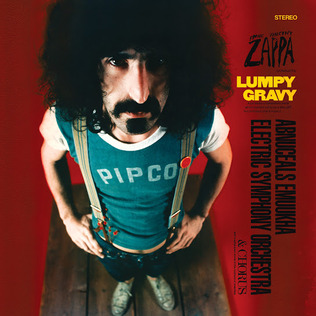
Zappa's career was also marked by constant conflict with the music business. He fought labels over control, release schedules, censorship, and ownership. His 'Lumpy Gravy' and 'We're Only in It for the Money' period already showed how much he cared about editing and presentation, and later disputes with Warner Bros. became part of the story around albums such as 'Zappa in New York', 'Studio Tan', 'Sleep Dirt', and 'Orchestral Favorites'. He did not treat albums as casual product. Even when the results were messy or uneven, they were part of a larger archive of compositions, performances, characters, and ideas that he kept reworking.
In 1979, Zappa released 'Joe's Garage', one of his most ambitious narrative projects. Structured as a rock opera narrated by the Central Scrutinizer, it imagined a world where music becomes criminalized. The story is comic, crude, dystopian, and deeply connected to Zappa's fear of authoritarian control over expression. Musically, it ranges from hard rock and reggae touches to intricate guitar solos and studio-built transitions. The album also contains one of his major guitar statements, 'Watermelon in Easter Hay', a long, emotionally direct solo piece that stands out because it feels unusually open and mournful within a record full of satire. 'Joe's Garage' shows Zappa's paradox clearly: he could surround a serious defense of musical freedom with jokes, grotesque characters, and deliberately offensive absurdity, yet the seriousness was still there.
During the 1980s, Zappa became widely known not only as a musician but as an opponent of censorship. When the Parents Music Resource Center pushed for warning labels and stronger control over popular music, Zappa testified before the United States Senate in 1985. He argued against censorship with the same mixture of logic, sarcasm, and distrust of moral panic that had animated his records for years. The moment mattered because it put him in a public role that suited him: not a gentle elder statesman, but a sharp, articulate defender of speech who treated political theater as another bad arrangement in need of exposure. The irony became even stronger when his instrumental album 'Jazz From Hell' later carried a parental advisory label despite having no lyrics.
Technology gave late-period Zappa another route. He became fascinated with the Synclavier, a digital instrument and composition system that allowed him to create music of extreme rhythmic and harmonic complexity without depending entirely on human performers. This was not simply a gadget phase. Zappa had long been frustrated by the cost, rehearsal limits, and imperfections of orchestral performance, especially when classical musicians did not meet the precision he wanted. The Synclavier offered a way to hear impossible or nearly impossible music exactly as programmed. 'Jazz From Hell', released in 1986, won a Grammy and stands as one of the clearest statements of his late compositional world: angular, artificial, funny, cold in places, but unmistakably his. For listeners who came to him through guitar solos or the Mothers, it could be alienating. For Zappa, it was another logical extension of the same lifelong project.
Even so, Zappa never abandoned live performance as a laboratory. His concerts could include old songs rearranged beyond recognition, new compositions, political commentary, audience participation, and long guitar improvisations. He treated guitar solos as spontaneous compositions, often extracting live solos from one context and placing them into studio albums in another. This method, sometimes called xenochrony, allowed performances recorded in one musical setting to be combined with unrelated tracks. It was not random collage for its own sake; it reflected his belief that time, rhythm, and performance could be edited into new relationships. A Zappa solo was not just a blues-rock break. It could be raw material for architecture.
His bands became proving grounds for extraordinary players. Musicians such as Steve Vai, Terry Bozzio, Adrian Belew, George Duke, Jean-Luc Ponty, Vinnie Colaiuta, Ruth Underwood, and many others either passed through his orbit or were sharpened by it. Zappa could be severe, and former band members have described both the thrill and strain of working under him. He disliked drug use in his bands, demanded readiness, and valued musicians who could handle humor without losing discipline. The result was a body of live and studio work where technical skill rarely feels polite. The playing is often dazzling, but it is also theatrical, mocking, aggressive, and alive.
Zappa's personality remains difficult to smooth into a simple heroic portrait. He was a fierce advocate of free expression, but he could be caustic and controlling. He mocked conformity, but he ran his bands with strict authority. He made music full of rude jokes and cartoon voices, yet he also wrote serious orchestral scores and pursued exacting compositional systems. He distrusted both government power and sentimental counterculture. He could seem like a comedian to rock fans and like a rock provocateur to classical institutions. That tension is not a flaw in understanding him; it is the point. Zappa's art lived in contradiction, and he rarely tried to make himself more comfortable for anyone.
In the early 1990s, as he was living with prostate cancer, Zappa continued working. One of the most important late projects was 'The Yellow Shark', recorded with the Ensemble Modern and released in 1993. Unlike some earlier orchestral experiences that left him dissatisfied, this collaboration gave his concert music a level of commitment and precision he respected. The performances showed that his compositions could survive outside the rock-band frame and that the supposedly impossible rhythmic and textural demands were not merely private obsessions. They could become vivid, funny, and forceful in the hands of musicians willing to enter his language fully.
Frank Zappa died on December 4, 1993, from prostate cancer. His death ended one of the most productive careers in modern music, but it did not freeze the work. Posthumous releases, archival concerts, session boxes, and family-managed projects have continued to expand the official catalog. This has sometimes made his discography intimidating, but it also proves how much music he documented. Zappa thought like an archivist as well as a performer. He recorded obsessively, saved performances, edited pieces across years, and treated his catalog as an ongoing construction site.
His influence is unusually broad because different musicians take different Zappas from the same body of work. Guitarists study his tone, phrasing, and long-form improvisations. Progressive rock and fusion musicians study the odd meters, unison lines, and formal complexity. Experimental artists admire the tape edits, sound collage, and refusal of genre boundaries. Comedy musicians and satirists recognize his ear for American nonsense. Electronic and computer-based composers can hear a precursor in his Synclavier work. Even artists who do not sound like him have borrowed his permission structure: the idea that popular music can be funny, ugly, virtuosic, political, childish, intellectual, and deeply organized all at once.
Zappa matters because he did not merely blend genres. Many artists mix styles; Zappa built a whole system out of collision. Doo-wop harmonies, Varese-inspired percussion, blues guitar, jazz fusion, studio editing, orchestral writing, crude jokes, civic outrage, and difficult rhythms all became parts of one language. His catalog can be difficult, uneven, hilarious, exhausting, brilliant, and deliberately irritating, sometimes within the same album. But behind the provocation was a rare seriousness about music itself. He believed sound could expose stupidity, resist control, mock fashion, and create its own strange order. That belief made him one of the most singular figures in twentieth-century popular music, a composer who entered rock and roll not to obey it, but to rebuild it in his own difficult image.