
The Man From Utopia
By Frank Zappa
The Story
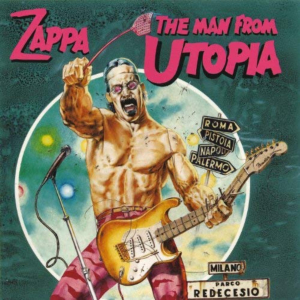
Released on March 28, 1983, The Man from Utopia brought together studio recordings and live material from the early 1980s in one of Frank Zappa's most fragmented and deliberately contrasting albums. Rather than following a single storyline, it moves between satirical songs, spoken-word pieces, tightly arranged instrumentals, and collage-like sequencing. The original vinyl program is important here because its pacing depends on how those pieces are grouped and how the side break reshapes the album's momentum.
Cocaine Decisions opens with a direct attack on drug-influenced power and fashionable self-destruction, while The Dangerous Kitchen shifts immediately into one of Zappa's best-known spoken performance pieces, turning domestic disorder into rhythmic monologue. Tink Walks Amok and The Radio Is Broken continue that contrast between instrumental precision and comic language. Mōggio then expands the musical side of the record with layered guitar writing and a more developed instrumental feel, showing that the album is not just a delivery system for jokes.
The second side of the original release begins with The Man from Utopia Meets Mary Lou, which combines Zappa's title motif with a cover of the rhythm-and-blues song Mary Lou. That joined presentation matters because it turns the track into a deliberate collision between old-pop material and Zappa's own stylized framing, rather than two separate songs. Stick Together and SEX keep the tone unstable, mixing satire, rock structure, and spoken phrasing, before The Jazz Discharge Party Hats returns to the dense speech-rhythm experiments that define much of the album's personality.
We Are Not Alone closes the record on a more spacious note, but the overall impression of The Man from Utopia is one of abrupt shifts by design. Zappa uses those shifts to connect social commentary, verbal performance, and guitar-centered composition without smoothing the joins. The original 1983 release plays less like a conventional rock album than a sequence of sharply edited scenes, each emphasizing a different part of his early-1980s method.