
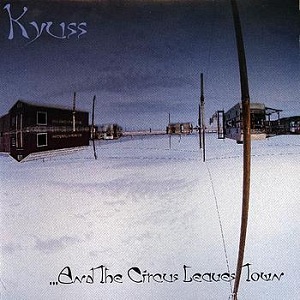
...And the Circus Leaves Town
By Kyuss
The Story
Released on July 11, 1995, ...And the Circus Leaves Town marked the final studio album by Kyuss and captured the band at a transitional moment. Following the expansive and cohesive structure of Welcome to Sky Valley, the group—now consisting of Josh Homme, John Garcia, Scott Reeder, and Alfredo Hernández—approached this album with a more fragmented and varied style. The lineup change, particularly the replacement of bassist Nick Oliveri and drummer Brant Bjork, contributed to a different rhythmic feel and overall direction.
Recorded with producer Chris Goss, the album retains the core elements of Kyuss’ sound—heavy riffs, low-tuned guitars, and groove-based structures—while introducing more variation in pacing and arrangement. Compared to earlier releases, the songs are more distinct from one another rather than flowing together as a continuous suite, reflecting a shift away from the seamless structure of their previous album.
Hurricane opens the album with a driving rhythm and layered guitar textures, setting a steady tone. One Inch Man follows with a more direct and accessible structure, becoming one of the album’s most recognizable tracks. Thee Ol' Boozeroony and Gloria Lewis continue the mix of heavy grooves and melodic elements, while Phototropic introduces a slower, more atmospheric feel.
El Rodeo and Jumbo Blimp Jumbo maintain the album’s balance between structured riffs and open-ended sections. Tangy Zizzle and Size Queen continue the groove-driven approach, emphasizing repetition and rhythmic interplay. Catamaran, a cover, provides a more concise and melodic moment within the sequence.
The closing track Spaceship Landing stands out as an extended composition that builds gradually, incorporating dynamic shifts and layered instrumentation. It serves as a culmination of the band’s approach, combining heavy riffs with atmospheric development and improvisational elements.
...And the Circus Leaves Town emphasizes variation, groove, and tonal weight while moving away from the continuous structure of earlier work. The album reflects a band in transition, maintaining its core sound while exploring different arrangements and pacing. As their final release, it captures Kyuss at the end of their evolution, balancing heaviness with experimentation and leaving a lasting influence on the development of desert rock.