
Kid A
By Radiohead
The Story
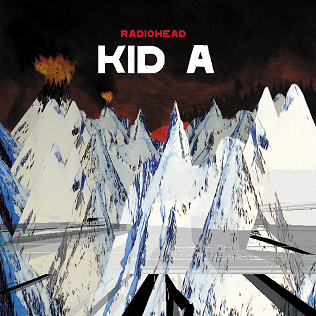
Released on October 2, 2000, Kid A marked a radical shift in Radiohead’s sound following the success of OK Computer. Rather than continuing their guitar-driven style, the band turned toward electronic music, ambient textures, and experimental composition. The recording sessions, which took place between 1999 and 2000 with producer Nigel Godrich, were marked by uncertainty and a desire to break away from traditional songwriting structures. Thom Yorke in particular moved away from conventional lyrics and vocal delivery, often treating vocals as another layer within the music rather than a central focal point.
Everything in Its Right Place opens the album with processed vocals and minimal keyboard patterns, immediately signaling the departure from previous work. Kid A follows with fragmented rhythm and heavily manipulated vocal effects. The National Anthem introduces a bass-driven groove layered with chaotic horn arrangements, contrasting structured rhythm with free-form elements. How to Disappear Completely slows the pacing with orchestral textures and restrained vocals, providing one of the album’s most atmospheric moments.
Treefingers acts as an ambient interlude built from processed guitar sounds, emphasizing texture over structure. Optimistic reintroduces a more recognizable rock framework, while In Limbo blends guitar and electronic elements into a disorienting arrangement. Idioteque stands out for its electronic rhythm and repetitive structure, becoming one of the album’s most recognized tracks. Morning Bell continues the fragmented style with shifting patterns, leading into Motion Picture Soundtrack, which closes the album with a minimal arrangement built around organ and layered textures.
Kid A emphasizes texture, atmosphere, and experimentation over traditional song structure. The album blends electronic influences with elements of jazz and ambient music, often prioritizing mood and sound design. By moving away from conventional rock forms, Radiohead created a record that redefined their direction and became a landmark release in experimental rock.