

The Story
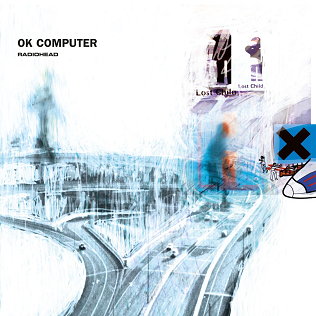
Released on May 21, 1997, OK Computer was Radiohead’s third studio album and the record that transformed the band from a successful British guitar group into one of the defining album artists of its era. After The Bends, Radiohead did not want to simply make a bigger, shinier version of the same thing. Working with Nigel Godrich, the band recorded much of the album in their own rehearsal space in Oxfordshire and at St Catherine’s Court, a historic mansion near Bath, choosing environments that felt less clinical than a standard studio and helped them capture performances with more space, atmosphere, and natural reverb. Ed O’Brien later said that most of the album was recorded live, which helps explain why even its most carefully layered songs still feel tense and human rather than overly polished.
The album grew out of a period when the band, especially Thom Yorke, felt increasingly alienated by modern life, travel, publicity, and the machinery surrounding success. Those pressures fed directly into the songs. Rather than building a conventional concept album with a strict plot, Radiohead made a sequence of connected pieces about speed, anxiety, disconnection, consumer culture, political unease, and the feeling of human beings struggling to stay emotionally intact inside systems that flatten them. The title itself came from a phrase the band had picked up from The Hitchhiker’s Guide to the Galaxy, but Yorke also connected it to fear of the future and the uneasy act of facing technology rather than escaping it. Jonny Greenwood resisted calling the record a full concept album, yet the band spent significant time shaping the running order so it would feel like one continuous emotional environment.
That atmosphere is present from the start. Airbag opens after a collage-like introduction and immediately introduces one of the album’s recurring ideas: survival after catastrophe, rebirth inside a damaged world. Paranoid Android then blows the format open. Its multi-part structure, abrupt shifts, and unstable emotional tone made it a risky lead single, but the band chose it anyway, even though it was not obviously radio-friendly. That decision says a lot about OK Computer as a whole: the album did not simplify Radiohead’s instincts for wider success, it trusted that complexity itself could connect. Exit Music (For a Film), written for Baz Luhrmann’s Romeo + Juliet, deepens the record’s sense of dread and escape, while Let Down turns urban transit, exhaustion, and emotional collapse into something strangely beautiful.
Several songs became central to the album’s identity because they translated its larger themes into unforgettable forms. Karma Police sounds almost welcoming at first, but its calm surface hides menace, judgment, and instability. No Surprises wraps one of the bleakest emotional statements on the record inside a lullaby-like arrangement, making its resignation hit even harder. Fitter Happier, spoken by a synthesized voice, sits at the center of the album like a mission statement from a dehumanized world: not a song in the ordinary sense, but a list of optimized behaviors that reduces life to managed routines, self-improvement slogans, and emotional emptiness. Even among Radiohead’s most experimental moves, it remains one of their sharpest.
The album also carries important personal and musical context inside individual tracks. Lucky had actually been recorded earlier, in 1995, for The Help Album, and its presence helped point toward the mood and scale that OK Computer would eventually reach. The Tourist, the closing track, was inspired in part by seeing people rush through life in a frenzy, and it ends the album not with a grand resolution but with a warning to slow down. That makes it a perfect final statement for a record obsessed with motion, overload, and the damage caused by constant acceleration. Yorke’s anxieties about transport, modern routine, and the feeling of being carried along by forces outside your control are all over the album, which is one reason it still feels so coherent even though the songs vary so much in structure and texture.
The way OK Computer was made matters almost as much as what it says. By recording outside a standard studio routine, using natural room sound, preserving live takes, and avoiding over-separation, Radiohead and Godrich built an album that feels immersive rather than assembled from isolated parts. Strings were later recorded at Abbey Road, and the final mixes balanced clarity with unease, allowing every song to sound detailed without losing its haunted atmosphere. The result was an album that still belonged to rock music but no longer behaved like a standard rock album. It widened Radiohead’s palette and laid the groundwork for the more radical experiments they would pursue later, while remaining deeply song-driven.
OK Computer was not universally expected to be a commercial triumph. Capitol reportedly feared it lacked obvious hits and even reduced its sales expectations, but the album went on to become a major success and a defining work of the late 1990s. More importantly, it changed how listeners and critics understood Radiohead. Instead of being seen mainly as the band that had survived Creep, they were now treated as artists capable of making ambitious, unsettling, era-defining albums. Its reputation has only grown because its themes never stopped feeling relevant. Long before social media saturation or smartphone dependency, OK Computer captured the emotional texture of living in a world shaped by systems, noise, speed, and alienation. That is why it continues to matter: not just because it is beautifully made, but because it understood something lasting about modern life and turned that understanding into songs that are anxious, strange, and deeply alive.