

The Story
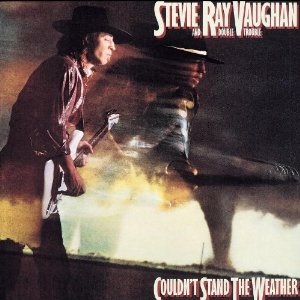
Released on May 15, 1984, Couldn't Stand the Weather followed the success of Stevie Ray Vaughan and Double Trouble’s debut and expanded their sound while maintaining the raw intensity that had defined Texas Flood. After extensive touring, the band entered the studio with increased confidence and a larger audience. The album blends original compositions with reinterpretations of blues material, while also incorporating more varied dynamics and extended arrangements. Vaughan’s guitar work remains central, but the record places greater emphasis on mood, texture, and instrumental contrast.
The opening instrumental, Scuttle Buttin', immediately showcases Vaughan’s speed and precision, functioning as a brief but energetic introduction. The title track, Couldn't Stand the Weather, follows with a driving groove and expressive guitar phrasing, reflecting the band’s tight rhythm section of Tommy Shannon and Chris Layton. The Things (That) I Used to Do continues the blues tradition, reworking the Guitar Slim classic with a heavier tone and extended soloing.
One of the album’s most widely recognized performances is Voodoo Chile (Slight Return), Vaughan’s interpretation of the Jimi Hendrix composition. Rather than simply replicating the original, Vaughan emphasizes a sharper, more aggressive tone while preserving the song’s structure. Cold Shot introduces a laid-back shuffle feel, contrasting with the heavier tracks and highlighting the band’s dynamic range. Tin Pan Alley (AKA Roughest Place in Town) slows the tempo dramatically, creating a spacious arrangement that allows Vaughan’s phrasing and sustain to shape the performance.
Honey Bee returns to a more traditional blues framework, while Stang's Swang provides an instrumental built around rhythmic interplay and melodic development. The album closes with SRV, an instrumental tribute to guitarist Lonnie Mack. The piece moves at a restrained pace, focusing on tone and expressive phrasing rather than speed, providing a reflective conclusion.
Couldn't Stand the Weather builds on the foundation of Vaughan’s debut while broadening the emotional and stylistic range. The album alternates between fast instrumentals, slow blues, and groove-oriented tracks, emphasizing both technical ability and expressive playing. With its mix of originals, reinterpretations, and tributes, the record solidified Stevie Ray Vaughan’s position in the blues revival of the 1980s and demonstrated the band’s growing maturity in both performance and arrangement.