
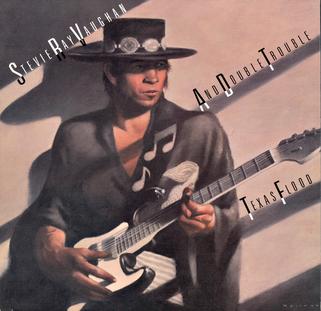
Stevie Ray Vaughan
Biography
Stevie Ray Vaughan was born in Dallas, Texas, in 1954, into a home where music was not a career plan so much as a force already moving through the walls. His older brother Jimmie Vaughan became the first serious guitarist in the family, and Stevie followed him with the intensity of a younger sibling who was not content merely to imitate. He picked up guitar early, learned largely by ear, and absorbed records with a hunger that would shape his whole life: Albert King, B.B. King, Freddie King, Buddy Guy, Otis Rush, Guitar Slim, Lonnie Mack, and, later, Jimi Hendrix. Those names matter because Vaughan's art was not built from one source. He took the thick bends and vocal phrasing of electric blues, the flash and volume of rock, the shuffle of Texas dance bands, and the hard attack of a player who seemed to pull rhythm and lead from the same hand at the same time.
Before he became famous, Vaughan was a working musician in the most practical sense. He left school and played clubs, bars, and small rooms around Dallas and Austin, surviving on gigs and reputation rather than record-company support. Austin in the 1970s was crucial to him. The city had a blues scene, a country scene, hippie audiences, and late-night rooms where musicians could stretch songs far beyond the radio version. Vaughan played with bands including the Cobras and Triple Threat Revue, and by the late 1970s the group that became Double Trouble had begun to take shape. The classic trio of Vaughan, bassist Tommy Shannon, and drummer Chris Layton was lean and direct: no decorative layer, no safety net, just guitar, bass, drums, voice, and feel. Shannon had played with Johnny Winter, Layton had deep command of Texas shuffle rhythms, and Vaughan stood in front with a battered Stratocaster, heavy strings, and a tone that made even old blues forms feel newly dangerous.
His main guitar, nicknamed 'Number One', became part of the mythology, but it was not a museum object. It was a working instrument, worn down by sweat, clubs, travel, and an aggressive right hand. Vaughan often used very heavy strings compared with many rock guitarists, and he tuned down a half step, which helped give the guitar a thicker, looser growl while still letting him bend notes with enormous force. That physical sound was central to his identity. He did not play blues as polite revival music. He played it as if the song were happening in real time, with every bend, rake, pause, and burst of speed carrying dramatic weight. His singing was sometimes overshadowed by the guitar reputation, but it had the same quality: rough, sincere, and tied closely to phrasing rather than theatrical perfection.
One of the events that changed Vaughan's life happened before he had a major record deal. In 1982, Double Trouble played the Montreux Jazz Festival in Switzerland. The appearance was unusual: a loud Texas blues trio facing an international festival crowd that was not fully prepared for them. Some listeners reportedly booed, but the set also caught the attention of important people, including David Bowie and Jackson Browne. The Montreux performance became a classic turning point in Vaughan's story because it showed both sides of his position at the time. He was still an outsider, too raw for some rooms and too traditional for parts of the rock business, yet he was also good enough that musicians immediately understood what was in front of them. Bowie soon invited Vaughan to play lead guitar on the album 'Let's Dance', and Vaughan's sharp, singing lines helped color tracks such as 'Let's Dance' and 'China Girl'. For a guitarist with no major album yet under his own name, it was a remarkable entrance into the wider pop world.
The other decisive break came through Jackson Browne, who offered Vaughan and Double Trouble time at his studio in Los Angeles. The band recorded much of 'Texas Flood' in only a few days in late 1982, and that speed gave the album its character. It does not sound like a carefully constructed studio debut by a new major-label act. It sounds like a road band captured while the engine was still hot. Released by Epic in 1983, 'Texas Flood' arrived at a strange moment for blues. Mainstream rock radio was moving toward glossy production, new wave textures, and arena polish; Vaughan appeared with a trio record rooted in shuffles, slow blues, and hard guitar tone. The title track, originally associated with Larry Davis, became one of Vaughan's defining performances, not because he modernized it with studio tricks, but because he made the guitar speak in long, pleading phrases. 'Pride and Joy' brought a lighter swing and became his calling card, while 'Love Struck Baby' and 'Rude Mood' showed how closely his playing could connect blues vocabulary with rock momentum.
The importance of 'Texas Flood' was not only commercial, though it did sell far beyond what many might have expected from a blues record in 1983. It changed the conversation around electric guitar. Vaughan did not present the blues as an antique. He made it loud, immediate, technically dazzling, and emotionally direct. He also gave young guitar players a new model at a time when much rock virtuosity was moving toward metal speed and studio perfection. Vaughan's virtuosity was different. It was in the bite of the note, the way he could drag behind the beat and then snap forward, the way he could repeat a phrase until it felt less like a lick and more like insistence.
The follow-up, 'Couldn't Stand the Weather', released in 1984, proved that Vaughan was not simply a one-record phenomenon. It broadened the band's language without abandoning its core. The album included his version of Hendrix's 'Voodoo Chile (Slight Return)', a risky choice because Hendrix was one of the few guitarists whose shadow could swallow almost anyone. Vaughan did not treat the song like costume work. He played it with reverence, force, and Texas weight, turning the piece into a statement about lineage: Hendrix had expanded blues into psychedelic electricity, and Vaughan was pulling some of that voltage back into the blues club. The album also featured 'Cold Shot', with its clipped rhythm guitar and wounded humor, and 'Tin Pan Alley', a slow blues performance that showed how much patience he could bring when he was not exploding across the fretboard. The record reached a larger audience than the debut and helped establish Double Trouble as a major touring act.
Vaughan's rise had a cost. His schedule was punishing, and his dependence on alcohol and cocaine became serious during the mid-1980s. This part of his biography matters because it shaped both the danger and the later renewal in his work, but it should not be romanticized. By the time of 'Soul to Soul' in 1985, Double Trouble had expanded with keyboardist Reese Wynans, whose Hammond and piano gave the band a wider, richer sound. The album had strong moments, including 'Change It' and 'Look at Little Sister', and Wynans helped the group move beyond the strict trio format. But the period was also physically and emotionally unstable. During a 1986 tour in Europe, Vaughan's health deteriorated badly, and he entered treatment. He later spoke publicly about recovery, and the change was not cosmetic. It affected his discipline, his performances, and the way listeners understood the next stage of his career.
A revealing anecdote from Vaughan's earlier career involves Albert King. Vaughan had loved King's playing for years, especially the massive string bends and vocal-like phrasing, and the two eventually performed together for the television program 'In Session' in 1983. The footage is fascinating because it is not a simple passing of the torch. King, older and commanding, tests the younger guitarist with authority and humor, while Vaughan answers with respect rather than empty showing off. The encounter makes clear how deeply Vaughan belonged to a blues tradition that valued conversation, tone, timing, and nerve. He could play fast, but speed was never the whole point. In a room with Albert King, the point was whether a phrase had weight.
Another important moment came from the Bowie connection. Vaughan recorded on 'Let's Dance', but he did not join Bowie's tour. The decision has been discussed in different accounts over the years, with issues involving billing, money, and management often mentioned. What is clear is that Vaughan ended up back with his own band at the exact moment he might have become a high-profile sideman in a global pop machine. That outcome helped define his career. He was not built to be a decorative guitarist in someone else's show. His power came from standing in the center of Double Trouble, where every dynamic turn responded to his hands and voice.
After recovery, Vaughan's music gained a new kind of clarity. 'In Step', released in 1989, was his first studio album after getting sober, and it is often heard as his most complete work. The title itself carried meaning: he was in step musically, personally, and rhythmically with a band that had survived years of pressure. The album's songs addressed struggle without turning the record into a confession booth. 'Tightrope' balanced a hard groove with lyrics about walking a dangerous line, while 'Wall of Denial' dealt with self-deception in direct, blues-rock language. Musically, 'In Step' is tighter and more focused than 'Soul to Soul'. The production gives the instruments space, the band sounds powerful but disciplined, and Vaughan's playing is fiery without feeling reckless. The record won a Grammy for Best Contemporary Blues Recording, confirming what audiences had already sensed: Vaughan had not merely returned; he had deepened.
The final studio project Vaughan completed during his lifetime was not a Double Trouble album but a family statement. 'Family Style', recorded with Jimmie Vaughan and released shortly after Stevie's death, brought the Vaughan brothers together in a way fans had long wanted. Their styles were related but distinct. Jimmie was cooler, more economical, and more angular; Stevie was heavier, more volcanic, and more openly emotional. The album does not erase that difference. It lets the contrast become the point. Heard after 1990, 'Family Style' carries an unavoidable sadness, but it also documents something joyful: two brothers from Dallas, both shaped by blues and Texas guitar culture, finally making a full record together.
Vaughan's stage presence was visually memorable without being theatrical in a planned, glam-rock sense. The wide-brimmed hat, scarves, boots, and decorated Stratocaster became recognizable, but the real drama came from the way he played. He often seemed to lean into the guitar as though physically wrestling sound out of it. His solos could be long, but the best ones were not random displays. He built tension through repetition, dynamics, and tone: a whispered phrase, a sudden rake across the strings, a high bend held until it almost hurt, then a tumble of notes that landed back in the groove. Double Trouble's importance should not be understated here. Layton and Shannon gave him a floor strong enough to jump from. Their rhythmic discipline allowed Vaughan to stretch time without losing the song.
His relationship to tradition was sometimes misunderstood. Vaughan was not an innovator in the sense of inventing a new harmonic language or breaking blues form apart. His originality came from intensity, synthesis, and timing. He arrived when electric blues needed a public champion who could reach rock audiences without smoothing away the grit. He made listeners hear the connection between Texas blues, Chicago blues, soul, Hendrix, and bar-band endurance. He also directed attention back toward older Black blues musicians whose work had formed the foundation of the style. Like many revival figures, he benefited from traditions created before him, but he also used his visibility to keep those names circulating among younger listeners.
On August 26, 1990, Vaughan performed at Alpine Valley Music Theatre in Wisconsin on a bill that included Eric Clapton, Buddy Guy, Robert Cray, and Jimmie Vaughan. After the show, in the early hours of August 27, he boarded a helicopter with members of Clapton's entourage. The aircraft crashed shortly after takeoff in foggy conditions, killing everyone on board. Vaughan was 35. His death came at a particularly cruel moment because he was not in decline. He had regained his health, released one of his strongest albums, and reached a level of respect that crossed blues, rock, and pop audiences. The shock was intensified by the sense that his best later work might still have been ahead of him.
The years after Vaughan's death turned him into a symbol, but the symbol can sometimes flatten the musician. He was more than a tragic guitar hero. He was a serious student of blues, a ferocious live performer, a bandleader, a younger brother, a Texas musician formed by clubs and records, and a player whose sound was instantly identifiable after only a few notes. His influence can be heard in blues-rock guitarists who followed, from mainstream players to local club musicians who adopted his thick tone, aggressive bends, and mixture of reverence and volume. But influence is not only imitation. Vaughan also reminded a generation that the blues could still be a living language on a modern stage.
Today, Stevie Ray Vaughan's place in music history rests on a career that was brief but unusually concentrated. 'Texas Flood' reintroduced raw electric blues to a broad 1980s audience. 'Couldn't Stand the Weather' showed he could expand that language without weakening it. 'In Step' revealed a mature artist who had survived enough to play with new authority. His recordings remain important, but the deeper reason he endures is the feeling that the guitar, in his hands, was not separate from the body or the voice. It cried, snapped, pleaded, boasted, and burned. Vaughan did not make the blues fashionable by cleaning it up. He made it impossible to ignore by playing it as if every note had to justify itself.