
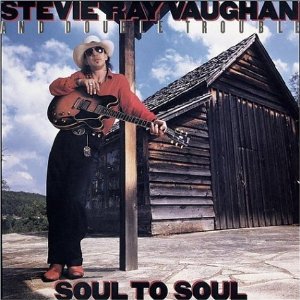
Soul to Soul
The Story
Released on September 30, 1985, Soul to Soul captured Stevie Ray Vaughan and Double Trouble at a transitional moment, combining their established blues-rock style with a broader band sound. By this stage, the group had been touring heavily and had begun expanding their lineup. Keyboardist Reese Wynans joined the band during the recording period, adding organ and piano textures that shaped the album’s arrangements and marked a shift from the trio format heard on earlier releases. The sessions reflected both the band’s live experience and their interest in incorporating additional musical layers.
The album opens with Say What!, an instrumental built around a prominent keyboard groove and fluid guitar phrasing. The track highlights the expanded ensemble sound and establishes a more relaxed, groove-oriented feel. Look at Little Sister returns to a concise, riff-driven structure, followed by Change It, which emphasizes rhythm and tight interplay between guitar and keyboards. These early tracks reflect the album’s balance between energetic blues rock and more layered arrangements.
Ain't Gone 'n' Give Up on Love presents a slower, expressive performance that allows Vaughan to stretch into extended phrasing, while Gone Home offers a brief instrumental interlude. Empty Arms continues the blues-based approach with a mid-tempo groove, and Come On (Part III), written by Jimi Hendrix, reconnects with Vaughan’s admiration for Hendrix’s influence. The interpretation blends fidelity to the original structure with Vaughan’s heavier tone.
Life Without You forms one of the album’s emotional centers. Built around gradual dynamic development, the track moves from restrained verses to more expansive instrumental passages, showcasing both vocal delivery and guitar expression. I'm Leaving You (Commit a Crime) returns to a traditional blues structure, and The Things (That) I Used to Do closes the album with another interpretation of the Guitar Slim song, previously recorded on the band’s earlier album but presented here in a new performance.
Soul to Soul reflects a band expanding beyond the power-trio format, incorporating keyboards and more varied arrangements while maintaining a foundation in electric blues. The album alternates between instrumentals, reinterpretations, and original material, emphasizing groove and ensemble interplay. Recorded during a demanding touring period, it captures Stevie Ray Vaughan and Double Trouble balancing raw blues energy with a broader, more textured sound.