
Nirvana
Biography
Nirvana began in a small, rain-soaked corner of Washington state and became the band that cracked open the mainstream for alternative rock. The story is often reduced to a simple myth: three outsiders, one explosive album, one tortured singer, and a generation changed overnight. The truth is more specific and more interesting. Nirvana were not mysterious prophets arriving from nowhere. They were a hard-working underground band shaped by poverty, boredom, punk records, cheap gear, damaged humor, and the strange musical instincts of Kurt Cobain, a songwriter who could make noise feel intimate and pop melodies feel wounded.
Cobain was born in Aberdeen, Washington, in 1967, and grew up in a logging town far from the glamour of the music industry. Aberdeen's isolation mattered. It gave his early life a sense of boredom, frustration, and outsider distance that later fed Nirvana's music. He loved the Beatles, punk rock, classic rock, and the abrasive underground bands that circulated through fanzines, college radio, and independent labels. His parents' divorce when he was young deeply affected him, and he moved between homes and relatives during his adolescence. But it would be too simple to treat his biography as a single explanation for his art. Cobain was not only hurt; he was funny, stubborn, visually imaginative, politically alert, and unusually skilled at turning contradiction into songs.
Krist Novoselic, born in Compton, California, and raised partly in Aberdeen after his family moved north, became Cobain's crucial early partner. Tall, dryly humorous, and musically steady, Novoselic gave Cobain's songs a heavy, grounded counterweight. The two bonded over punk records, especially the Melvins, the nearby Washington band whose slow, crushing sound became a major influence on Nirvana's early heaviness. Buzz Osborne of the Melvins introduced Cobain to parts of the underground punk world, and that network gave Nirvana an aesthetic home before anyone in the mainstream was watching.
Cobain and Novoselic played with several drummers before Nirvana settled into a working form. Early names and lineups shifted, as small-town bands often do. The music was rough, loud, and built from a collision between Cobain's love of melody and his attraction to ugly textures. That tension became the heart of Nirvana. Cobain could write a chorus as immediate as a classic pop single, but he often buried it under distortion, sarcasm, feedback, or lyrical unease. He loved beauty and distrusted polish. He wanted success and mocked the machinery that created it. He could make a song sound like it was falling apart while secretly controlling its shape.
Nirvana's debut album, 'Bleach', was released in 1989 by Sub Pop, the Seattle label that helped define the early grunge scene. Recorded cheaply with producer Jack Endino, 'Bleach' was heavier, murkier, and more metallic than the music that later made Nirvana famous. Chad Channing played drums on most of the album, and the record leaned toward sludge, punk, and the influence of the Melvins and Black Sabbath. Songs such as 'Blew', 'Floyd the Barber', 'School', and 'Negative Creep' showed a band still finding itself, but already full of character. The lyrics were often fragmented and grotesque, less confession than collage, and Cobain's voice could shift from exhausted mumble to sandblasted scream within a few lines.
'Bleach' did not make Nirvana famous, but it gave them a foothold in the underground. The album's title came after Cobain saw public health messaging related to needle cleaning, and its grim, minimal cover and sound fit the band's early world. Sub Pop marketed Seattle as a scene with a certain mud-caked mythology, and Nirvana were part of that, but they were never simply one more local band. Even on 'Bleach', Cobain's melodic instincts kept pushing through the noise. 'About a Girl', written after listening heavily to the Beatles, stood apart from the album's heavier material and hinted at the pop songwriter inside the punk disguise.
The band's early touring was hard and unglamorous. Nirvana traveled in cramped vans, played small clubs, slept where they could, and lived through the ordinary misery of underground touring: bad food, little money, unreliable equipment, and audiences that could be indifferent or hostile. These experiences helped toughen the band, but they also fed Cobain's complicated relationship with ambition. Nirvana wanted to reach people, yet they came from a punk world suspicious of careerism. That conflict would become much larger once the band actually broke through.
Dave Grohl joined Nirvana in 1990 after playing in the Washington, D.C.-area hardcore band Scream. His arrival changed everything. Grohl was powerful, precise, and musical, with a drumming style that could hit like machinery while still serving the song. He gave Cobain and Novoselic the force they had been missing. The classic Nirvana lineup was not simply Cobain plus two supporting players. Novoselic's bass lines added movement and personality, often carrying countermelodies beneath the guitar. Grohl's drums gave the quiet-loud dynamics huge physical impact. Together, the trio sounded much larger than three people.
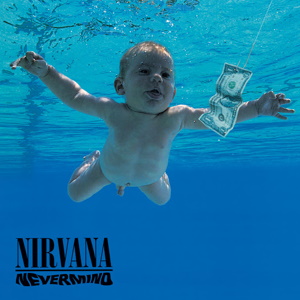
After leaving Sub Pop and signing with DGC Records, Nirvana recorded 'Nevermind' with producer Butch Vig. The sessions took place in 1991, and the album's sound was cleaner and more focused than 'Bleach'. Vig helped shape the performances, double-track Cobain's vocals, and bring clarity to the songs without removing their force. Cobain sometimes resisted obvious studio polish, but he also cared deeply about how records sounded. 'Nevermind' worked because it balanced underground aggression with pop structure. The guitars were distorted, but the hooks were enormous. The band sounded damaged and accessible at the same time.
'Smells Like Teen Spirit' became the song that changed Nirvana's life. Its title came from a phrase spray-painted by Kathleen Hanna of Bikini Kill, referring to a deodorant brand, though Cobain initially interpreted it differently. Musically, the song used a quiet-loud dynamic that owed something to the Pixies, a band Cobain admired. But the result was unmistakably Nirvana: a murky opening riff, explosive chorus, Grohl's massive drum entrance, and lyrics that sounded like a rallying cry even while resisting clear interpretation. The video, set in a decaying high school pep rally, captured the boredom, anger, and absurdity of youth culture with a mix of satire and real release.
'Nevermind' was released in September 1991 and became a phenomenon by early 1992, eventually displacing Michael Jackson's 'Dangerous' from the top of the Billboard album chart. That chart moment became symbolic, sometimes too neatly so, but it did signal a genuine shift. Major labels, radio programmers, MTV, and the music press suddenly turned toward alternative rock. Nirvana did not create underground music, punk ethics, or Seattle's scene, but they became the point where those currents entered the mainstream with overwhelming force.
The album itself remains powerful because it is more than one single. 'In Bloom' mocked people who liked pretty songs without understanding their meaning, while itself being a perfect pretty song with a huge chorus. 'Come as You Are' moved with watery guitar tones and an inviting melody that carried unease beneath it. 'Lithium' turned religious imagery, loneliness, and emotional instability into a controlled explosion. 'Polly', based on a real kidnapping and assault case, was written from the perpetrator's perspective in a deliberately disturbing way, avoiding sensational detail while exposing cruelty. 'Drain You' showed Cobain's gift for turning bodily imagery and romantic obsession into melody. The hidden track 'Endless, Nameless' reminded listeners that beneath the pop breakthrough was still a band capable of chaos.
Cobain was immediately uncomfortable with the scale of Nirvana's success. Part of that discomfort came from punk ideals, part from physical and emotional strain, and part from the way the media simplified him. He was turned into a spokesman for a generation, a role he repeatedly rejected. He was also more politically and culturally engaged than the lazy slacker stereotype suggested. Cobain supported feminist and anti-homophobia causes, admired bands from the riot grrrl scene, and used interviews and liner notes to challenge macho behavior in parts of Nirvana's audience. He wanted the band's music to reach outsiders, but he was disturbed when some listeners seemed to embody the attitudes he disliked.
In 1992, Nirvana released 'Incesticide', a compilation of B-sides, demos, radio sessions, and rarities. It was not a normal follow-up to a blockbuster, which was part of its point. The record connected new fans to Nirvana's rougher underground side, including songs such as 'Sliver', 'Dive', 'Aneurysm', and covers of the Vaselines. Cobain used the liner notes to address sexism, racism, and homophobia among some fans, making clear that Nirvana's success did not mean he wanted every possible listener on any terms. The compilation showed the band's humor, rawness, and affection for obscure pop-punk and indie influences.
Cobain's marriage to Courtney Love of Hole in 1992 intensified media attention around his private life. Their daughter Frances Bean Cobain was born that year, and the couple became a focus of tabloid reporting, moral panic, and invasive speculation. Cobain's drug use and health problems also became part of the public narrative, sometimes discussed with cruelty and sensationalism. His struggles affected the band, his relationships, and his reliability, but they should not be treated as the whole of who he was. He remained a working artist, a father, a reader, a visual thinker, and a musician trying to control a life that had become painfully public.
For Nirvana's third studio album, Cobain wanted a sound that pushed back against the polished accessibility of 'Nevermind'. The band hired Steve Albini, known for his raw, unsentimental recording style. The result was 'In Utero', released in 1993. It was sharper, uglier, more abrasive, and more intimate than 'Nevermind'. Albini recorded the band with a live, room-heavy approach, emphasizing natural dynamics and harsh edges. Some mixes were later adjusted by Scott Litt for commercial release, including 'Heart-Shaped Box' and 'All Apologies', but the album still sounded like a refusal to become a comfortable arena-rock product.
'In Utero' is Nirvana's most complex album. 'Serve the Servants' opened with a line that punctured the myth around Cobain's family trauma while refusing easy confession. 'Scentless Apprentice', inspired by Patrick Suskind's novel 'Perfume', showed the band's most brutal side. 'Rape Me' used repetition and provocation to express violation and resistance, though its title and bluntness ensured controversy. 'Heart-Shaped Box' combined surreal imagery with one of Cobain's strongest melodies. 'Pennyroyal Tea' carried exhaustion and self-disgust in a stark, memorable form. 'All Apologies' closed the album with a mood that felt resigned, tender, and unresolved.
The making and reception of 'In Utero' showed Nirvana's impossible position. If they made another clean, hook-filled album, they risked becoming the mainstream machine they distrusted. If they made something too abrasive, they risked being accused of self-sabotage. The album succeeded because it did not simply choose one side. It contained noise and beauty, disgust and vulnerability, satire and sincerity. It proved that Nirvana's success had not erased their artistic nerve.
In late 1993, Nirvana recorded 'MTV Unplugged in New York', one of the most important performances of their career. Instead of playing a greatest-hits acoustic set, they chose a strange, shadowed repertoire: deep cuts, covers, and guest appearances from members of the Meat Puppets. The stage was decorated with lilies and candles, creating a subdued atmosphere that later took on additional meaning. Cobain's voice was exposed in a way that distortion often masked. He sounded fragile at times, but also controlled, funny, and deeply present.
The 'Unplugged' performance revealed how strong Nirvana's songs were without volume. 'About a Girl' became bright and direct. 'Come as You Are' turned eerie rather than explosive. The Meat Puppets covers, especially 'Lake of Fire' and 'Plateau', showed Cobain's generosity toward the underground bands he loved. The closing cover of Lead Belly's 'Where Did You Sleep Last Night' became one of his most famous vocal performances, not because it was technically perfect in a polished sense, but because it gathered restraint, force, and dread into a final, devastating rise. After Cobain's death, the performance was often treated as a farewell, though it was not planned that way.
Nirvana's final months were marked by severe strain. Cobain's health, addiction, exhaustion, and the pressures around the band became increasingly difficult. In April 1994, Cobain died in Seattle at age 27. The news shocked fans around the world and abruptly ended Nirvana as a living band. For many listeners, especially young people who had found recognition in his songs, his death felt personal. It also froze Nirvana's story in a way that can sometimes distort the band's actual work.
It is important to speak about Cobain's death without turning it into the center of the art or romanticizing it. Nirvana's music mattered before the tragedy, and it continues to matter because of craft, chemistry, and vision. Cobain's writing was full of pain, but also humor, disgust, tenderness, absurdity, and melodic intelligence. Novoselic and Grohl were not background figures; they were essential to the impact of the records. The band ended because Cobain died, but the music should not be reduced to an omen of that ending.
After Nirvana, Dave Grohl formed Foo Fighters, first as a solo recording project and then as a full band, becoming one of rock's most successful later figures. Krist Novoselic pursued music, political activism, and other projects while remaining protective of Nirvana's legacy. Releases after the band's end, including 'MTV Unplugged in New York', 'From the Muddy Banks of the Wishkah', the box set 'With the Lights Out', and various anniversary editions, expanded the public understanding of the band. They showed demos, rehearsals, live power, and the range of material that existed beyond the three studio albums.
Nirvana's influence is enormous, but it is sometimes misunderstood. They did not invent alternative rock, punk, indie rock, grunge, or the quiet-loud dynamic. Their importance lies in how they brought those ideas together with unforgettable songwriting at exactly the right historical moment. They made abrasive underground values commercially unavoidable. They also changed what a rock star could look and sound like in the mainstream: unglamorous, conflicted, thrift-store dressed, suspicious of fame, and emotionally exposed without sounding polished.
The band's sound rested on contrast. Cobain's guitar playing was not virtuosic in the traditional lead-guitar sense, but it was highly expressive. He used power chords, dissonant shapes, feedback, and simple figures with a strong sense of drama. Novoselic's bass was often more melodic and mobile than casual listeners notice, giving songs like 'Lounge Act' and 'Lithium' much of their movement. Grohl's drumming brought mass and clarity, turning choruses into physical events. Together, they created music that could feel primitive on first impact and carefully structured on closer listening.
Cobain's lyrics remain compelling partly because they resist being solved. He often wrote in fragments, images, contradictions, jokes, and bodily metaphors. Some lines came from notebooks and were assembled more for sound and emotional pressure than linear narrative. This did not make them meaningless. It made them unstable in the way thoughts can be unstable. His songs often captured disgust at social rules, gender expectations, consumer culture, hypocrisy, and the performance of normality. He could write a line that sounded like nonsense and make it feel emotionally exact.
Nirvana's key albums form a remarkably compressed arc. 'Bleach' is the raw underground document, heavy with sludge and punk abrasion. 'Nevermind' is the breakthrough, a record where pop melody and distorted force collided with perfect timing. 'Incesticide' is the bridge back to the underground, revealing the band's odd humor and wide influences. 'In Utero' is the artistic confrontation, the sound of a band refusing to become safe. 'MTV Unplugged in New York' is the exposed final portrait, proving that the songs could survive in near silence.
Their cultural legacy also includes the bands and scenes they pulled into public view. Nirvana's success brought attention to Seattle, Sub Pop, punk ethics, college radio, indie labels, and a broad network of artists who had existed far from mainstream approval. This attention was not always healthy for those scenes, and the industry quickly turned grunge into a marketable style. But Nirvana's breakthrough still opened space for music that had previously been dismissed as too ugly, too strange, or too uncommercial.
Nirvana are sometimes remembered as a symbol of youth alienation, but their best music is more alive than that phrase suggests. It is angry, yes, and often bleak, but it is also catchy, funny, sarcastic, tender, and full of movement. Cobain had a pop gift he could never fully hide, even when he tried to damage the surface around it. That is why the songs traveled so far. They gave listeners melody and noise, release and discomfort, identification and mystery.
Today, Nirvana remain one of the essential bands in rock history because they changed the direction of popular music without smoothing out their contradictions. They were a punk band that became a mass phenomenon, a pop band that hated polish, a noisy trio whose songs could be sung by millions, and a group whose brief career left almost no filler. Their story ended painfully, but their music still feels immediate because it was built from tensions that never fully resolve. Beauty against distortion. Fame against refusal. Humor against despair. Simplicity against chaos. Nirvana made those tensions sound like songs, and for a few years, those songs changed the world around them.