
Red Hot Chili Peppers
Biography
Red Hot Chili Peppers began as one of the strangest, loudest, and most physically alive bands to come out of early 1980s Los Angeles. Their story starts less like the formation of a polished rock group and more like four young friends daring each other into a new language. Anthony Kiedis and Michael Balzary, better known as Flea, met as teenagers at Fairfax High School, where Los Angeles felt like a collision of punk shows, skate culture, Hollywood edges, street energy, and art-school oddity. Kiedis had grown up close to the entertainment world through his father, actor Blackie Dammett, but his own talent came from rhythm, attitude, memory, and performance rather than conventional singing. Flea, born in Australia and raised partly in New York before settling in Los Angeles, had studied trumpet and loved jazz before becoming a bassist whose playing sounded percussive, melodic, and restless all at once. With guitarist Hillel Slovak and drummer Jack Irons, they first performed under the deliberately absurd name Tony Flow and the Miraculously Majestic Masters of Mayhem. The joke did not last, but the energy did.
From the beginning, the band was built on contradiction. They loved Parliament-Funkadelic, Sly and the Family Stone, the Meters, James Brown, and Jimi Hendrix, but they were also children of the Los Angeles punk underground, where speed, shock, and nerve counted as much as musicianship. They were not trying to be a neat funk band or a standard punk band. They turned funk into something sweaty, rude, fast, and cartoonishly physical. Kiedis shouted, chanted, rapped, and moved like a frontman who treated the stage as a playground and a boxing ring. Flea's bass could carry a song almost by itself, popping and snapping but also singing through the changes. Slovak gave the music a wiry, Hendrix-influenced guitar voice, full of scratches, bends, and psychedelic color. Irons gave the earliest version of the group a loose but explosive rhythmic push. In small clubs, the Chili Peppers became less a normal band than an event: funny, chaotic, sometimes crude, but impossible to confuse with anyone else.
Their early music was also tied to the recklessness of their lives. Drug use was not a decorative detail in the Red Hot Chili Peppers story; it was part of the environment around them, part of the danger that shaped their friendships, and eventually one of the forces that nearly destroyed them. The band's early image often made wildness look like comedy, but behind the jokes and stage antics there were real addictions, especially around Kiedis and Slovak. To tell the story without that would make the band seem cleaner and simpler than it was. The Chili Peppers were not just a party band that later became serious. They were a band whose music grew out of pleasure, risk, escape, grief, recovery, and the repeated attempt to survive their own appetites.
Their 1984 debut, 'The Red Hot Chili Peppers', captured only part of what they were. Slovak and Irons were temporarily absent because of commitments to their other band, What Is This?, so guitarist Jack Sherman and drummer Cliff Martinez played on the album. Producer Andy Gill, known for Gang of Four, brought a disciplined post-punk sensibility, while the Chili Peppers wanted something more raw and bodily. The result was uneven but important. It introduced the basic formula: funk rhythm, punk attack, surreal humor, and Kiedis's rapid-fire vocal style. Still, it did not fully capture the chemistry of the original four friends. The band sounded energetic, but not yet dangerous in the exact way they were dangerous live.
The return of Hillel Slovak changed everything. 'Freaky Styley', released in 1985 and produced by George Clinton, connected the group directly to one of its deepest sources. Clinton's presence mattered because he understood funk as more than neat grooves; he understood it as freedom, absurdity, mythology, and bodily motion. The album was still rough, and the band was still commercially small, but it moved closer to the true Chili Peppers identity. It sounded looser, stranger, and more comfortable in its own skin. By 'The Uplift Mofo Party Plan' in 1987, the original lineup was finally together on record. That album remains the clearest document of the first era: fast, sweaty, immature in places, but bursting with the confidence of a band that had invented a private world and dared listeners to enter it.
Then the private world cracked. Hillel Slovak died of a heroin overdose in 1988 at the age of 26. His death was not only the loss of a guitarist; it was the loss of one of the band's emotional and musical architects. Slovak had helped teach the Chili Peppers how to sound like themselves. His guitar did not simply decorate the grooves. It gave them twitch, humor, danger, and color. Jack Irons, devastated by Slovak's death, left the band soon afterward. Kiedis and Flea chose to continue, but from that point on the band carried a wound inside its story. Drug addiction was no longer just part of the wild atmosphere around them. It had taken one of their own.
The rebuilding of the band brought in two musicians who would define its next and most famous shape: guitarist John Frusciante and drummer Chad Smith. Frusciante was very young, deeply devoted to the band's early music, and unusually sensitive to melody and space. He did not merely imitate Slovak, though Slovak's influence was part of his entry point. He brought a different kind of emotional vocabulary, one that could be sharp and funky but also fragile, open, and melodic. Smith, from Detroit, did not come from the same Los Angeles circle, and at first he seemed almost too muscular and straight-ahead for the band's oddball chemistry. But that power became essential. He grounded the chaos without making it stiff.
'Mother's Milk', released in 1989, was the first album with Frusciante and Smith. It pushed the band toward wider recognition, especially through their version of Stevie Wonder's 'Higher Ground', but it also sounded crowded and forceful compared with what they would later become. The production often emphasized impact over space, and Frusciante's guitar was not yet allowed the airiness that would become one of his gifts. Still, the album mattered because it proved the Chili Peppers could survive Slovak's death without turning into a museum of their old selves. They were damaged, but not finished. The rhythm section was heavier. The guitar was younger and more melodic. Kiedis still leaned into bravado, sex, jokes, and speed, but the conditions were forming for something deeper.
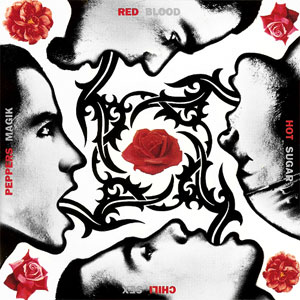
That deeper thing arrived with 'Blood Sugar Sex Magik' in 1991. Working with Rick Rubin after signing to Warner Bros., the band found a producer who helped them remove clutter instead of adding polish. The album was recorded largely in a mansion in Los Angeles, a setting that became part of the record's mythology because the band lived inside the sessions rather than treating them like ordinary studio appointments. The sound was dry, warm, and immediate. Flea's bass still snapped and leapt, but it breathed. Smith's drums hit hard without flattening the groove. Frusciante's guitar was suddenly full of character: clipped funk figures, ringing chords, ghostly textures, and bursts of melody. Kiedis, meanwhile, began to sound less like a nonstop party instigator and more like a writer who could turn private confusion into communal hooks.
The album's importance lies in its range. 'Give It Away' turned generosity, absurdity, and bodily motion into a jagged funk-rock anthem. 'If You Have to Ask', 'Suck My Kiss', and 'The Power of Equality' kept the band's rhythmic aggression and swagger. But 'Under the Bridge' changed how the world heard them. The song grew from Kiedis's writing about loneliness, drug addiction, and alienation in Los Angeles. It had almost none of the cartoonish exterior associated with the band. Frusciante's guitar part and backing vocals gave the track a fragile, almost devotional quality, while Kiedis sounded exposed in a way he rarely had before. The song did not erase the band's wildness; it revealed the ache underneath it. Suddenly Red Hot Chili Peppers were not only strange and explosive. They could be wounded.
Fame brought another rupture. Frusciante struggled with the sudden scale of the band's success and left during the 1992 Japanese leg of the tour. His departure was one of the clearest examples of how unstable the Chili Peppers' chemistry could be. The band was built on friendship and instinct, but success turned that chemistry into pressure. In the years that followed, Frusciante's drug addiction became severe, and his absence from the band became part of a larger story of collapse and survival. The Chili Peppers continued with replacement guitarists before settling on Dave Navarro, formerly of Jane's Addiction, for 'One Hot Minute' in 1995.
'One Hot Minute' is often treated as the odd album in the catalog, but it is more interesting than that. Navarro was a gifted and charismatic guitarist, yet his musical instincts came from a darker, more metallic, more gothic branch of alternative rock. He did not naturally occupy the same rhythmic space as Slovak or Frusciante. The result was a record full of tension: heavier guitars, thicker moods, and a sense of a band trying to find itself under difficult circumstances. Songs such as 'Warped', 'Aeroplane', and 'My Friends' show real ambition, but the album also reflects Kiedis's renewed struggle with drug addiction and the band's uncertain internal balance. It is not a failure of talent. It is the sound of talented people not fully sharing the same center.
By the late 1990s, Red Hot Chili Peppers could easily have become a band remembered mainly for one explosive breakthrough and a trail of damage. Instead, their second great life began when Frusciante returned in 1998. His return was not a simple nostalgic reunion. He had survived a severe period of addiction and reentered the band with a changed presence, thinner in sound, more patient, and more emotionally direct. The album that followed, 'Californication', released in 1999, became one of the defining records of the band's career. It did not try to out-shout the early years. It slowed the band down, opened space, and let melancholy become central.
'Californication' turned the band's history with drug addiction, fame, and Los Angeles myth into a broader emotional landscape. 'Scar Tissue' moved with exhausted grace, its slide guitar phrases answering the vocal like little wounds of sound. 'Otherside' dealt directly with the pull of addiction and the difficulty of escaping patterns that repeat even after a person knows the damage. The title track looked at California as both dream factory and machine of distortion, a place where beauty, fame, loneliness, and artificiality could become impossible to separate. Even when the album was accessible and melodic, it carried the memory of what the band had lived through. The Chili Peppers were no longer just translating funk into rock. They were translating survival into melody.
The success of 'Californication' also changed the way Kiedis functioned as a lyricist. His writing remained full of strange phrases, place names, internal rhymes, and sudden surreal images, but the emotional center was clearer. Flea, once known mainly for explosive slap bass, increasingly used restraint and melodic support. Smith stayed powerful but disciplined, giving the songs a solid frame. Frusciante became the emotional hinge of the sound. His guitar did not need to dominate every moment. Sometimes a few notes, a thin chord, or a backing vocal carried more weight than a full solo. That sense of space became one of the great differences between the early Chili Peppers and the mature band.
'By the Way', released in 2002, pushed that melodic transformation even further. It is one of the least funk-centered albums of the classic lineup, and that shift created tension inside the band, especially because Flea's identity had always been so deeply tied to funk and rhythmic force. But the tension also gave the record its shape. Frusciante's layered backing vocals, bright guitar voicings, and love of pop harmony became central. 'The Zephyr Song', 'Dosed', 'Universally Speaking', and 'Can't Stop' all show different ways the band could move beyond its original formula. The album is not the sound of a young band exploding outward. It is the sound of a band asking whether it could mature without losing its pulse.
The answer, for a time, was yes. 'Stadium Arcadium', released in 2006, was the grand statement of that period. A double album produced again by Rick Rubin, it gave the band enough room to stretch in nearly every direction it had developed: funk-rock, melodic pop, hard rock, balladry, loose jams, and guitar-centered drama. 'Dani California' continued Kiedis's habit of turning recurring characters and California mythology into song, while 'Snow (Hey Oh)' used one of Frusciante's most recognizable cycling guitar figures. The record became a major commercial success and won the Grammy Award for Best Rock Album. Yet it also felt like the end of a chapter. After touring, the band went on hiatus, and Frusciante left again in 2009, this time to focus on his own music.
Josh Klinghoffer, who had toured with the band and collaborated with Frusciante, became the guitarist for the next era. His position was difficult from the start because he was not replacing only a musician; he was replacing a relationship. The chemistry between Kiedis, Flea, Smith, and Frusciante had become part of the band's mythology. Klinghoffer's approach was more textural and less dominant, often working through atmosphere rather than instantly recognizable riffs. 'I'm with You', released in 2011, introduced a leaner, sometimes more keyboard-colored Chili Peppers. 'The Adventures of Rain Dance Maggie' brought a relaxed groove, while 'Brendan's Death Song' carried real emotional weight, written in connection with the death of Brendan Mullen, an important supporter of the Los Angeles punk scene and an early champion of the band.
In 2012, Red Hot Chili Peppers were inducted into the Rock and Roll Hall of Fame. The induction recognized the band's enormous commercial reach, but also something stranger: their ability to turn a hybrid that once seemed too odd, too crude, and too local into a global rock language. The honored members included Kiedis, Flea, Smith, Frusciante, Klinghoffer, Slovak, Irons, and Cliff Martinez, underlining how deeply the band's history depends on its lineup changes. In some groups, a member change alters the live presentation. In Red Hot Chili Peppers, especially at guitar, it alters the emotional weather.
'The Getaway', released in 2016, was another important change because the band worked with Danger Mouse rather than Rick Rubin, with Nigel Godrich mixing the album. The result had a cooler, more sculpted sound. 'Dark Necessities' placed piano and a sleek bass movement near the center, showing that the band could still find a fresh angle on its own identity. The Klinghoffer era was not simply a waiting room for Frusciante's return. It produced music with its own mood: more shaded, less explosive, sometimes more restrained. Still, the public question never disappeared. For many listeners, the deepest Chili Peppers chemistry remained the one with Frusciante.
In 2019, the band announced that Frusciante had returned and Klinghoffer had departed. The announcement was brief, but its emotional meaning was large. The classic lineup of Kiedis, Flea, Frusciante, and Smith went back to Rick Rubin and recorded at Shangri-La in Malibu, producing enough material for two 2022 albums, 'Unlimited Love' and 'Return of the Dream Canteen'. These records did not pretend the band was young again. Their value came from something else: the sound of older musicians returning to a shared language after many lives had passed through it. 'Black Summer' reintroduced Frusciante's guitar as a broad melodic force. 'Poster Child' leaned into loose funk narration. 'Eddie' paid tribute to Eddie Van Halen not by copying his style, but by giving Frusciante space for an extended emotional guitar performance.
The creative process of Red Hot Chili Peppers has always depended on physical chemistry. Flea and Smith form one of rock's most forceful rhythm sections, but not in a simple way. Flea often plays bass as a lead instrument, using slap technique, punk aggression, jazz phrasing, melodic counterlines, and sudden restraint. Smith gives the music a hard spine, making even the strangest grooves feel playable in arenas. Kiedis writes from rhythm first: vowels, street names, memories, internal rhymes, fragments of California, and flashes of private confession. Frusciante, in his major periods with the band, supplies the harmonic and emotional color. His best work with the Chili Peppers is not about technical display alone. It is about knowing when a song needs a scratch, a shimmer, a choir-like backing vocal, a jagged riff, or almost nothing.
Drug addiction remains one of the difficult threads running through the band's history. It should not be romanticized, because the cost was real: Slovak's death, damaged friendships, interrupted careers, and years of instability. But it also cannot be erased, because the band's emotional development makes less sense without it. The movement from 'The Uplift Mofo Party Plan' to 'Under the Bridge', from 'Blood Sugar Sex Magik' to 'Californication', from reckless performance to songs about survival and repetition, is partly the story of people learning that wildness has consequences. The Chili Peppers' best mature music does not present recovery as a clean victory. It often sounds more honest than that: tired, hopeful, ashamed, grateful, and still tempted by old patterns.
That honesty is one reason the band lasted. Their personality has always been contradictory. They can be ridiculous and sincere, crude and tender, disciplined and immature, spiritual and absurd, sometimes within the same album. Their early humor has not always aged gracefully, and their public image has often made them easy to caricature. But the deeper story is not just about shirtless funk-rock chaos. It is about a band that kept changing because life forced it to change: death, addiction, fame, recovery, departures, returns, friendship, and the strange endurance of musical chemistry.
Their influence is broad, though often misunderstood. Many bands copied the obvious surface: slap bass, rapped verses, funk-rock choruses, high-energy stage movement. Fewer captured the real engine of the Chili Peppers, which was the way they fused underground funk, punk speed, hip-hop rhythm, psychedelic guitar, and vulnerable songwriting into a form that could reach huge audiences without becoming completely smooth. In the late 1980s and early 1990s, they helped make alternative rock more rhythmically open. In the 2000s, their melodic period became part of the sound of global radio rock. They also made Los Angeles one of the central characters in their catalog: not just a sunny place, but a city of longing, performance, fantasy, addiction, reinvention, and loneliness.
Today, Red Hot Chili Peppers stand as a rare long-running band whose history is not a clean rise but a cycle of ruptures and returns. Hillel Slovak's presence still lives inside the band's origin story. Jack Irons's departure marks the depth of that early loss. John Frusciante's exits and returns changed the band's sound each time. Josh Klinghoffer carried the group through a real and meaningful chapter. Chad Smith became the engine that made the chaos durable. Flea remained the musical body of the band, restless and unmistakable. Anthony Kiedis, for all his limitations as a traditional singer, became the voice of a life lived in public, turning appetite, damage, place, and recovery into songs people could shout back at him. The Chili Peppers began as a joke with a groove and became one of the most recognizable rock bands of their generation because they learned, slowly and painfully, how to make wildness carry feeling.