Tool
Biography
Tool began as an unlikely collision of art-school imagination, Hollywood craft, underground noise, and disciplined musical force. The band formed in Los Angeles in 1990 around vocalist Maynard James Keenan, guitarist Adam Jones, bassist Paul D'Amour, and drummer Danny Carey. From the beginning, Tool did not behave like a normal rock group chasing a scene. Jones had worked in film special effects and makeup, a background that helped give the band's videos and packaging their handmade, unsettling character. Keenan had served in the U.S. Army, studied visual art, and sung in earlier projects before Tool. Carey brought a drummer's vocabulary that reached beyond hard rock, drawing from jazz, progressive rock, polyrhythm, and an interest in symbolic and geometric systems. D'Amour supplied the first version of the band's low, grinding bass pressure. What joined them was not a neat genre plan, but a shared attraction to intensity, structure, provocation, and release.
One often repeated origin story captures Tool's odd beginning: Jones heard a tape of Keenan singing with an earlier project, Children of the Anachronistic Dynasty, and urged him to start a band. Carey, who lived above Keenan, reportedly became involved after other invited drummers failed to show up. Early Tool was close to the Los Angeles alternative underground, but the band stood apart from the brighter funk-metal, glam-metal afterglow, and grunge-adjacent sounds around it. Their music was heavy, but not simply macho. It was angry, but strangely controlled. The riffs moved like machinery. Keenan's voice could sound wounded, sarcastic, accusatory, or ritualistic, sometimes within the same track. Accounts of the early period describe chaotic concerts with destroyed instruments and performance-art shock tactics. Even then, the point was not just spectacle. Tool were building a language in which discomfort, humor, discipline, and obsession could all exist together.
The 1992 EP 'Opiate' introduced Tool at their most direct. Its title track, 'Hush', and 'Part of Me' presented a young band with punk hostility, metal weight, and a singer who did not sound interested in easy identification. Keenan was not the conventional frontman asking to be loved. He sounded more like someone exposing a nerve and then mocking the audience for looking at it. The title 'Opiate' nodded toward a famous phrase associated with Karl Marx and religion, but Tool's early work was less a single political statement than a series of attacks on repression, hypocrisy, addiction, and self-deception. The music was still compact compared with what came later, but the core elements were already there: drop-tuned pressure, abrupt changes in tension, lyrics that mixed bodily imagery with psychological unease, and a refusal to make the singer the whole show.
'Undertow', released in 1993, turned that early aggression into a full-length statement. Produced by Tool with Sylvia Massy and recorded at Grand Master Studios in Hollywood, it arrived when alternative rock had opened a door for heavier and stranger bands. Still, Tool did not sound like grunge, thrash, or industrial metal in any simple way. The album was dry, claustrophobic, and physical. Songs such as 'Intolerance', 'Prison Sex', and 'Bottom' had the shape of confessions being forced through clenched teeth. 'Sober' became the breakthrough, helped enormously by its stop-motion video. Directed by Fred Stuhr, with models designed by Jones, the clip avoided normal band glamour and instead created a grim miniature world of figures, rooms, pipes, and mute ritual. Kurt Cobain publicly criticized the video for seeming too close to the work of the Brothers Quay, an accusation that became one of Tool's first major controversies. Whether seen as influence, imitation, or shared taste, the video established something crucial: Tool's visual identity would be as important as their sound, and it would not flatter the viewer.
The 'Sober' moment also showed how Tool could enter the mainstream without becoming welcoming. The song was accessible by Tool standards because of its huge descending riff and memorable vocal line, yet it was not built for comfort. Jones' guitar did not solo in the usual hard-rock sense; it locked into patterns, textures, and pressure points. Carey's drumming gave the songs a sense of shifting ground, while D'Amour's bass made the band feel subterranean. Keenan's lyrics for 'Sober' have often been connected to creativity, dependency, and self-deception, but Tool rarely reduced a song to a single explanation. Their best early music worked because it felt both specific and unstable: a listener could sense that something real was being addressed while the band kept the meaning partly hidden.
Tool's rise accelerated after 'Undertow', including a major boost from Lollapalooza in 1993, but internal pressure followed. Paul D'Amour left the band in 1995. His replacement, Justin Chancellor, formerly of the British group Peach, changed Tool's chemistry in a decisive way. Chancellor did not merely fill the bass role; he became one of the band's main melodic engines. His tone was thick and articulate, often carrying riffs that other rock bands would have given to the guitar. With him, Tool grew less blunt and more serpentine. The bass began to move in long, hypnotic figures, locking with Carey while leaving Jones room to create atmosphere, scraping harmonics, and massive chords.
That new chemistry emerged fully on 'Aenima', released in 1996 and produced with David Bottrill. The album remains one of the central works in Tool's story because it converted the rage of 'Undertow' into something wider, stranger, and more conceptually rich. 'Stinkfist' opened with a riff that felt both minimal and obscene, and its title caused immediate censorship problems; MTV referred to the video as 'Track No. 1' because of the title's sexual connotations. That incident suited Tool perfectly. They were a band that could make a serious, disturbing song about numbness and overstimulation, then frame it with a joke crude enough to make gatekeepers panic. This mixture of sincerity and provocation became part of their identity.
'Aenima' also deepened Tool's relationship with psychology, philosophy, satire, and bodily disgust. The title fused 'anima', the Jungian term, with 'enema', a joke that captured the album's blend of inner transformation and vulgar cleansing. The record moved from the coiled menace of 'Eulogy' and 'H.' to the obsessive evolution imagery of 'Forty-Six & 2', then to the title track 'Aenema', a fantasy of Los Angeles being washed away. Comedian Bill Hicks, whose anti-consumerist and anti-authoritarian worldview resonated with the band, was honored in the album's artwork and atmosphere. The closing epic 'Third Eye' used Hicks samples and pushed Tool toward the long-form psychedelic structures that would define their next phase. 'Aenema' won a Grammy for Best Metal Performance, but the album's importance is larger than an award. It proved that a hostile, esoteric, visually disturbing band could become commercially powerful without smoothing out its contradictions.
After 'Aenima', Tool entered a long and difficult gap shaped partly by legal disputes involving their label. The delay mattered because it intensified the band's mystique. In an era when many alternative-metal acts were becoming more radio-friendly, Tool seemed to withdraw and refine. Keenan worked with A Perfect Circle, but Tool did not dissolve. When they returned in 2001 with 'Lateralus', they sounded less like a band continuing a career than one unveiling a new architecture.
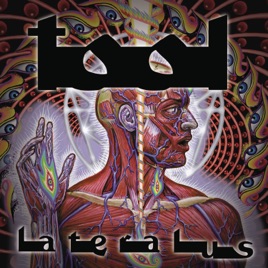
'Lateralus' is the album where Tool's progressive ambitions became impossible to ignore. It debuted at number one on the Billboard 200 and brought the band another Grammy for 'Schism', but its commercial success was unusual given the music's density. The songs stretched, folded, and spiraled. 'The Grudge' opened with a long build in shifting meters, turning resentment into something nearly ceremonial. 'Schism' made fractured rhythm sound catchy, its bass line becoming one of Chancellor's signature contributions. 'Parabol' and 'Parabola' moved from meditative calm into explosive affirmation. The title track has often been discussed for arranging parts of its vocal phrasing around the Fibonacci sequence, a detail that became central to Tool lore. What matters musically is not the mathematics alone, but how the song feels like a controlled ascent: riff, pulse, chant, and climax all pulling toward the instruction to 'spiral out'.
The making of 'Lateralus' also marked the full arrival of Tool as a band whose albums were immersive objects. Alex Grey's artwork connected the record to visionary anatomy and spiritual symbolism. The packaging, the videos, the stage projections, and the music all suggested a single environment. Tool were often mocked for encouraging overanalysis, and some of that mockery was understandable; the fan culture around the band could turn every track order or hidden noise into a puzzle. Yet the band's seriousness worked because the music had the discipline to support it. Carey could make asymmetry groove. Chancellor could make odd-meter riffs feel inevitable. Jones could hold back for minutes and then make one chord feel like a wall opening. Keenan increasingly used space, entering later in songs and refusing to crowd the arrangements. By 'Lateralus', Tool were not just a metal band with long songs. They had become a rare mainstream rock act built around patience.
'10,000 Days', released in 2006, arrived after another five-year wait and showed a more emotionally exposed side of the band. Produced with Joe Barresi rather than David Bottrill, it had a different surface: thicker, more modern, and sometimes more abrasive. 'Vicarious' examined spectatorship and violence through a driving, almost news-cycle rhythm. 'Jambi' combined a stomping groove with one of Jones' most recognizable talk-box guitar passages. 'The Pot' was unusually direct and hook-driven for Tool, giving Keenan a sharp, high-register performance that became one of the band's most popular songs.
The heart of '10,000 Days', however, is the two-part 'Wings for Marie' and '10,000 Days'. The suite was written in connection with Keenan's mother, Judith Marie, who suffered a paralyzing stroke when he was young and died decades later. The title refers to the approximate length of time she lived after that stroke. Tool had dealt with pain, trauma, and faith before, but this was different: less masked by sarcasm and less protected by grotesque imagery. The music moves slowly, with rain, thunder, long bass movement, and a vocal performance that stands among Keenan's most vulnerable. Keenan later said he regretted exposing himself so much in those songs, and the band has rarely made the full suite a routine part of its live identity. That reluctance became part of the piece's meaning. Tool's most emotionally direct work was also something they seemed unwilling to turn into ceremony on demand.
'10,000 Days' also won a Grammy for its elaborate recording package, which included stereoscopic lenses built into the CD case. That detail can sound like a gimmick, but it fits Tool's career-long insistence that an album should be a designed experience. Long before streaming reduced rock albums to thumbnails, Tool treated packaging as part of the art. Jones' background in visual effects remained essential. The band avoided appearing prominently in many of their videos, preferring animation, sculpture, flesh-like textures, and symbolic figures. They made themselves both famous and strangely absent, a paradox that helped preserve their aura.
Then came the long silence. Between '10,000 Days' and 'Fear Inoculum', Tool became one of rock's great waiting games. The gap lasted thirteen years. During that period, the band toured, worked slowly, faced expectations that grew almost impossible to satisfy, and stayed off major streaming services until 2019. That refusal to join the digital marketplace became another piece of Tool mythology. When their catalog finally arrived on streaming platforms in August 2019, it was treated as an event. Younger listeners who had known the band through fragments could finally encounter the albums in order, while older fans watched a pre-streaming band suddenly dominate a streaming-era conversation.
'Fear Inoculum', released later in 2019, was not a comeback built for speed. It was almost defiantly slow, spacious, and mature. The title track ran over ten minutes and entered the Billboard Hot 100, briefly holding the record for the longest song to reach that chart before Andre 3000 later surpassed it. The album debuted at number one on the Billboard 200, arriving above Taylor Swift's 'Lover' in a moment that became a symbolic victory for patient, album-oriented rock in a pop-dominated era. But the deeper story is musical. 'Pneuma', 'Invincible', 'Descending', and '7empest' are less about youthful rage than endurance, decay, renewal, and the stubborn continuation of the body and mind. Carey, Jones, and Chancellor often build the pieces instrumentally before Keenan enters like a commentator from the edge of the ritual rather than a frontman standing at the center.
'7empest' won the Grammy for Best Metal Performance in 2020, giving Tool another late-career validation. Yet 'Fear Inoculum' was also divisive in the way strong Tool records often are. Some listeners missed the compact violence of 'Undertow' or the acidic personality of 'Aenima'. Others heard the album as the logical endpoint of the band's slow-motion evolution: less explosive, more architectural, less interested in catharsis than in duration. Tool had aged without becoming nostalgic. They did not try to sound young. They sounded like four musicians still testing how long a riff can breathe before it changes shape.
One reason Tool matter is that each member occupies a distinct function without collapsing into a conventional hierarchy. Keenan is one of modern rock's most recognizable singers, but Tool is not simply his vehicle. In fact, part of his power comes from restraint. He often avoids the spotlight, performs from the rear or side of the stage, and lets the visual production and instrumental structures dominate. Jones is the band's visual architect as much as its guitarist, favoring tone, texture, and repetition over virtuoso display. Carey is the band's rhythmic architect, capable of making complex meters feel physical rather than academic. Chancellor's bass often works as the bridge between rhythm and melody, turning odd patterns into hooks. Together, they created a sound in which heaviness is not only volume or distortion, but pressure over time.
Tool's personality has always been difficult because the band combines seriousness with mockery. They can invoke Jung, sacred geometry, and spiritual transformation, then undercut themselves with toilet humor or deliberately ugly imagery. Keenan, in particular, has often presented a guarded, sarcastic public face, resisting the role of mystical guru that some fans try to assign him. This tension is part of Tool's appeal. The band invites deep listening, but it also punishes blind worship. It builds elaborate structures, then gives them names or images that make reverence uncomfortable. That balance keeps the work from becoming pure prog-rock solemnity.
Their influence can be heard across progressive metal, alternative metal, post-metal, and art-rock scenes, but Tool are difficult to imitate well. Many bands copied the drop-D heaviness, the long builds, the tribal drum feel, or the spiritual vocabulary. Fewer understood the patience and negative space. Tool's best music depends on withholding. Riffs repeat until they become environments. Vocals arrive late. Climaxes are delayed until the listener has almost stopped expecting them. The result is music that feels physical and cerebral at the same time, a rare combination in heavy rock.
By the 2020s, Tool occupied a strange and secure place: too popular to be underground, too stubborn to be fully mainstream, too precise to be jam-band mysticism, too bodily and aggressive to be merely intellectual. Their catalog is small for a band active since 1990, but that scarcity is part of the story. 'Opiate' and 'Undertow' show the young band as a weapon. 'Aenima' turns that weapon inward and outward at once, attacking culture, self, and city. 'Lateralus' expands the attack into a philosophy of motion. '10,000 Days' lets grief and mortality enter the machine. 'Fear Inoculum' studies age, endurance, and release with unusual patience. Across those records, Tool built one of the most distinctive bodies of work in modern heavy music: severe, funny, obsessive, private, theatrical, and unmistakably their own.